Quick summary — Most people check Google before they pick a place to eat. If your rating sits below 4.5 stars, you lose that customer before they ever walk in. But learning how to get more 5 star reviews for your restaurant does not take a big budget or a marketing degree. It takes a system and a habit.
- Ask for reviews right after the meal, not hours later.
- A QR code on your receipt cuts the steps to leaving a review down to one tap.
- Reply to every review, good or bad, within 24 hours.
- Never offer a discount or gift in exchange for a review.
- Your review count directly affects where you show up on Google Maps.
Why your star rating decides if customers pick you or your rival
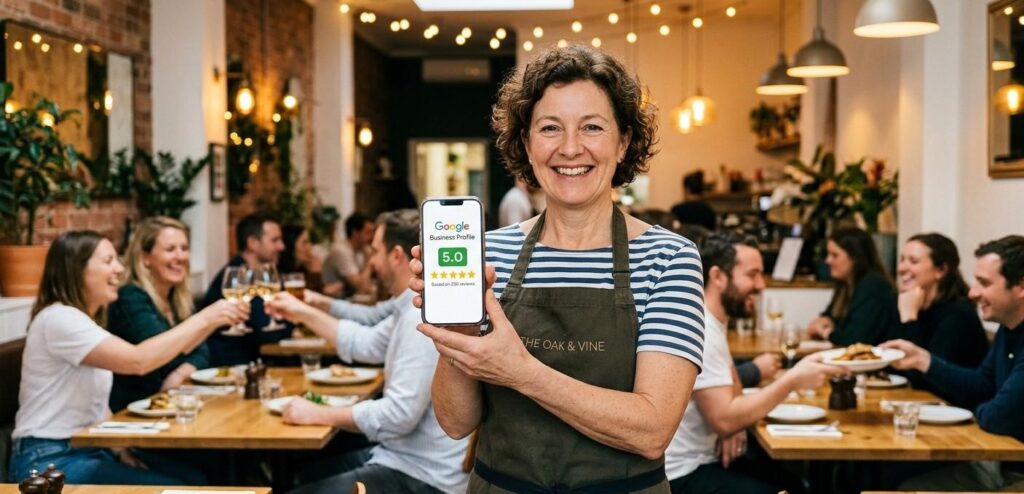
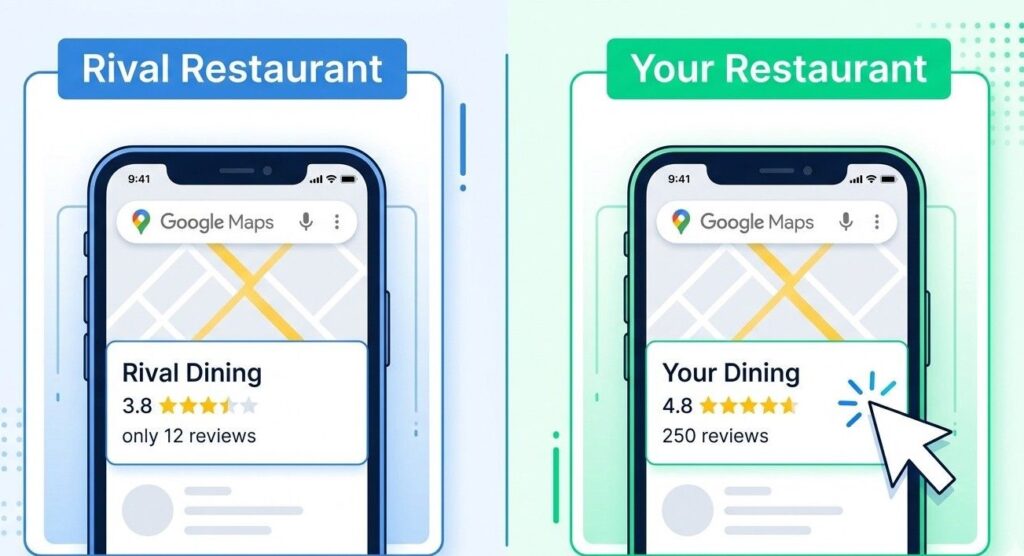
Your rating is the first thing a customer sees on Google Maps. A restaurant with 200 reviews at 4.6 stars beats one with 20 reviews at 4.9 stars almost every time. People trust volume. They trust patterns. And they trust recent reviews more than old ones.
Think about it this way. A guest searches “best brunch near me.” Google shows three restaurants in the local map results. Your rival has 300 reviews. You have 40. Even if your food is better, they win the click. That is why knowing how to get more 5 star reviews for your restaurant is one of the smartest things you can work on right now.
Your goal is not to collect a handful of glowing reviews. Your goal is a steady flow of new reviews every single week. That steady flow is what Google rewards with better rankings. It is also what turns a first-time visitor into a loyal regular. According to Moz’s local ranking factors research [opens in new tab], review signals including count, recency and star rating are among the top factors that drive local search visibility.
How to ask for a 5 star review without making it awkward
Most restaurant owners are scared to ask. They worry it sounds pushy. But here is the thing: people are genuinely happy to leave a review when the food was great. They just need a small nudge in the right direction.
The easiest ask is a warm, casual sentence. Your staff can say: “We are so glad you loved it. A quick Google review means the world to a small team like ours.” That is it. No long script. No pressure. Just a real ask from a real person.
The best moment to ask: right after the compliment lands
Train your team to listen for compliments. When a guest says “that was honestly the best pasta I have had in a long time,” that is your window. The feeling is fresh. The guest is happy. A happy guest almost always says yes. Waiting until they are at the door or sending an email the next day loses that moment forever.
The QR code trick that makes leaving a review take one tap
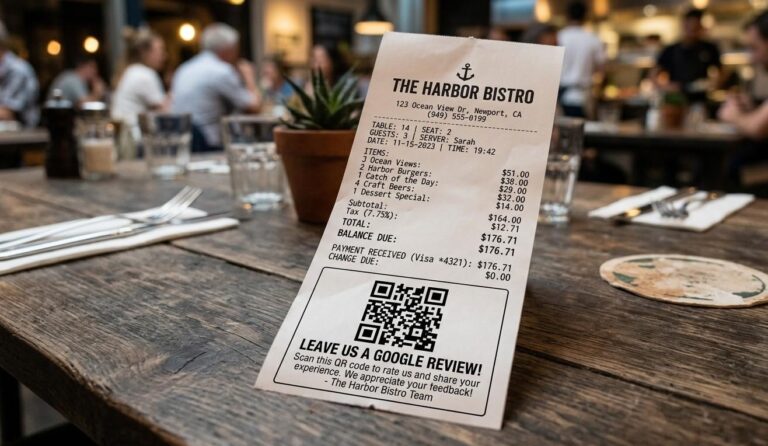
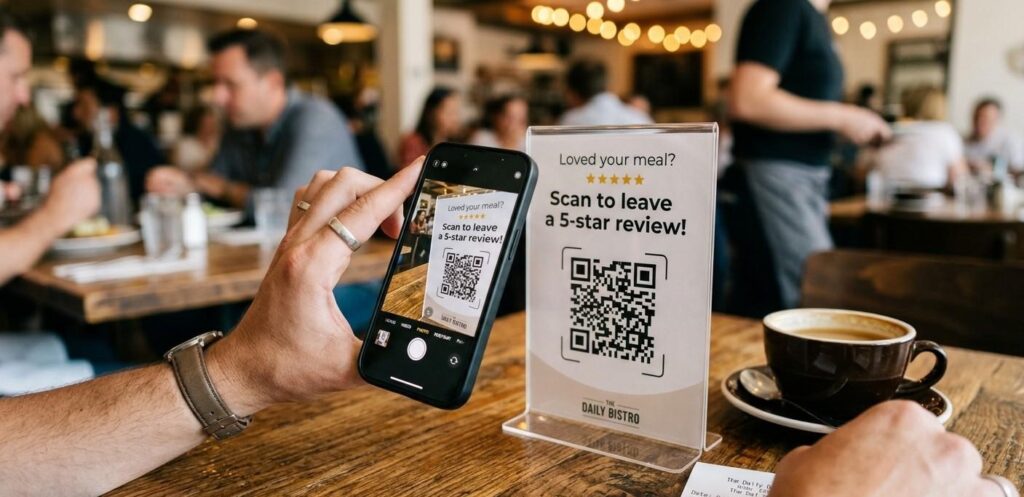
Print a QR code that links directly to your Google review form. Put it on your receipt, your table cards and the back of your menu. When a guest scans it, they land straight on the review page. No searching, no clicking around. Just a clean, fast path to leaving their rating. This one step alone can double your monthly review count without any extra effort from your staff.
How to get Google reviews coming in without chasing every table
Chasing individual customers for reviews after they leave is exhausting. But you can build a system so the reviews come to you.
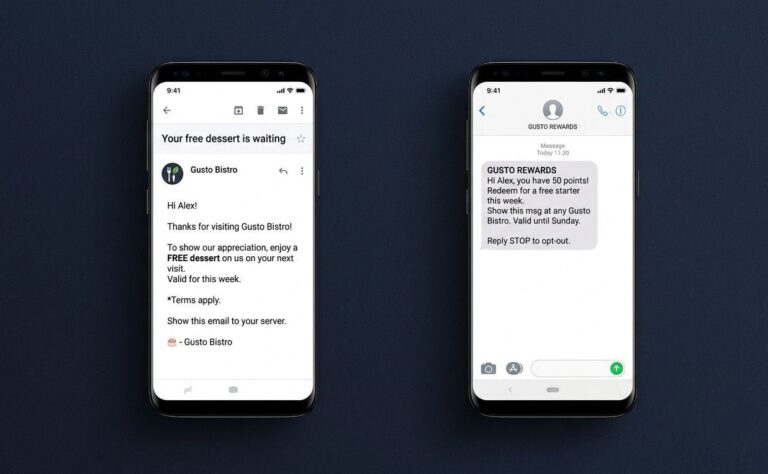
First, connect your booking or point-of-sale tool to an SMS or email platform. After each visit, the system sends a short message. If the guest says the experience was great, they get a direct link to your Google review page. This is one of the best restaurant reputation management tips you can use because it runs on its own once you set it up.
Second, add your Google review link to your Instagram bio and your Facebook page. Many loyal customers want to help but forget. A visible link removes that friction. Our social media management service can help you set this up across every channel your guests actually use.
Third, ask your regulars in person. You know their names. You know their favorite table. A personal ask from you, the owner, carries real weight. Most regulars say yes on the spot when you ask directly. This approach to how to get more 5 star reviews for your restaurant costs absolutely nothing.
How responding to negative restaurant reviews protects your rating
Getting a bad review hurts. But how you respond matters more than the review itself. People read your reply before they make a decision. Handle it well and a 1-star review can actually make you look trustworthy.
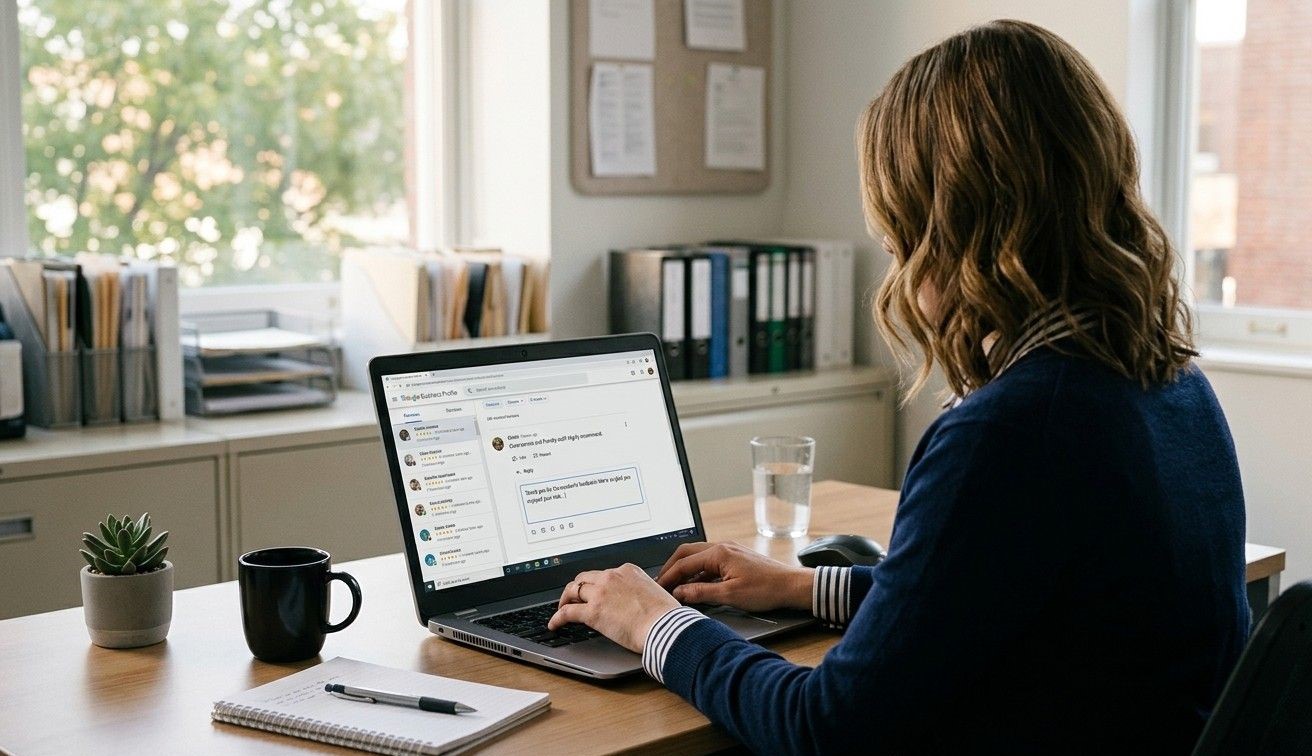
Responding to negative restaurant reviews always comes back to one rule: reply fast and stay calm. Thank the guest for the feedback. Say you are sorry they had a bad time. Then offer to make it right, either in the reply or by inviting them to contact you directly.
Why a good reply can turn an angry guest into a return customer
A guest who felt ignored after a bad meal might give you a second chance if you reach out with care. Many owners have turned a 1-star review into a new 5-star review from the same person after a follow-up visit. Your response is public. Every future customer who checks your page reads it. So write it for the whole audience, not just for the person who left the review.
According to Google’s support guidance on reviews [opens in new tab], responding to reviews shows that you value your customers and their feedback. That signal matters both to people and to Google’s ranking system. Getting better at responding to negative restaurant reviews is as important as getting more positive ones.
What to do when you find a fake or unfair review on your page
Fake reviews are real and they can drop your rating fast. A competitor, an ex-employee or a bot can post a review from an account that never visited your restaurant. You need to know what to do the moment you spot one.
Flag the review directly from your Google Business Profile. Click on the review, tap the three-dot menu and select “Report review.” Google checks the account history, the review pattern and the language used. If the review breaks its guidelines, Google removes it. The process takes days to weeks, so do not wait.
While you wait for a decision, respond to the fake review calmly. Write something like: “We checked our records and could not find any visit matching this experience. We take all guest feedback seriously and welcome anyone to contact us directly.” That response protects your restaurant reputation management while the review is still live. According to Backlinko’s guide to Google Maps SEO [opens in new tab], your response rate and reply quality are visible trust signals that affect how Google treats your profile. Your rating is your first impression and first impressions book tables. Pick one tactic from this post and use it tonight with your next happy table. And if you want a full system that grows your restaurant online beyond just reviews, our restaurant marketing team is ready to build it with you. Talk to us here.
Frequently Asked Questions
Q: How do I get customers to leave Google reviews?
The easiest way is a direct, personal ask right after the meal. Train your team to make that ask when a guest pays a compliment. Pair it with a QR code on your receipt that links straight to your Google review page. Remove every extra step and more guests will follow through. Learning how to get Google reviews for your restaurant starts with making the path as short as possible.
Q: How should a restaurant respond to a 1-star review?
Reply within 24 hours. Thank the guest for the feedback. Apologize for the experience without making excuses. Then invite them to contact you directly so you can make it right. Do not argue or get defensive. A calm, kind reply shows every future customer that you care. Responding to negative restaurant reviews this way often earns you more trust than a page of perfect 5-star ratings.
Q: Does having more reviews help restaurant rankings?
Yes. Google uses review count and review velocity as ranking signals for Google Maps. A restaurant with a steady flow of recent 5-star reviews ranks higher than one with a bigger rating but no new activity. That means learning how to get more 5 star reviews for your restaurant directly improves your position in local search results. Our SEO and local ranking service builds on that foundation.
Q: What is the best platform for restaurant reviews in 2025?
Google is the most important platform by far. Google reviews affect your Maps ranking, your local search visibility and your first impression on new guests. After Google, focus on Yelp and TripAdvisor. For restaurants near hotels or tourist areas, TripAdvisor carries extra weight. Start with Google, build that strong, then grow the others.
Q: Can fake reviews hurt my restaurant?
Yes. A cluster of fake 1-star reviews can drop your rating fast and push you down in Maps rankings. Check your reviews every day. Flag any review that shows clear signs of being fake: no profile photo, a brand-new account, no review history and language that does not match a real dining experience. Report them through your Google Business Profile right away.
Q: How do I remove a fake negative review?
You cannot delete a review yourself. But you can flag it as a policy violation in your Google Business Profile. Tap the three-dot menu on the review and select “Report review.” Google then checks the flag and removes the review if it breaks their guidelines. While you wait, reply calmly so other customers can see your response. Good restaurant reputation management tips always start with staying visible and professional, not going silent.
Q: How many reviews does a restaurant need to rank well on Google Maps?
There is no fixed number, but most restaurants in competitive areas need at least 50 to 100 recent reviews to appear in the local 3-pack. Volume matters but so does velocity. Ten new reviews a month beats 100 reviews posted two years ago. Build a weekly habit and use the systems in this post. That consistent flow is how to get more 5 star reviews for your restaurant in a way that actually sticks.