Quick summary — You post a photo of your best dish. It gets 40 likes, mostly from your regulars and a few relatives. Nobody new walks in. That is the story for most small restaurants on Instagram. The platform works. But only if you stop posting like a hobby account and start acting like a business.
- Reels reach far more new people than static photos on Instagram.
- Posting four to five times a week beats posting daily with no strategy.
- Behind-the-scenes content builds trust faster than polished ad photos.
- Your bio and link in bio must make booking a table as easy as possible.
- Consistency over time will do more for your growth than any single viral post.
Why most restaurant Instagram accounts get views but no new customers
The problem is not your food. The problem is your purpose. Most restaurants treat Instagram like a photo album. They post a nice dish, add a few hashtags and wait. The algorithm rewards content that sparks a reaction and keeps people on the app. A pretty plate alone rarely does that.
Think about it. When someone finds your restaurant on Instagram for the first time, they run a fast check. They look at your bio, scroll three or four posts and decide if your place looks worth visiting. That decision takes about six seconds.
The fix is simple. You need content that pulls people in and a profile that tells them what to do next. Your Instagram is not just a gallery. It is a sales tool. And every post should earn its place on that page.
What type of content actually drives customers through your restaurant door
Food photos have their place, but they are not enough on their own. The content types that consistently bring in new local customers are Reels, behind-the-scenes clips and posts that show real people enjoying your space.
Why behind-the-scenes videos build more trust than polished dish shots
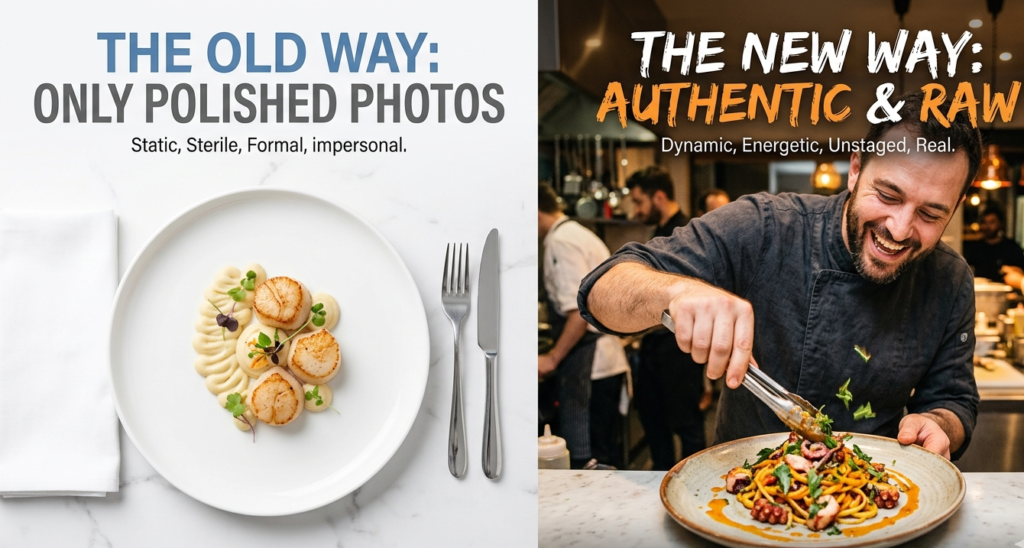
People buy from people they like. A 15-second clip of your chef plating the special tells a better story than any ad. It shows the effort, the care and the personality behind your kitchen. Viewers who feel that connection are far more likely to book a table.
Try filming your prep process, the moment a fresh batch of bread comes out of the oven or a quick chat with one of your regulars. Raw and real beats perfect and polished on Instagram every single time.
How user-generated content does the selling for you
When a customer posts a photo of their meal and tags your restaurant, share it to your Stories right away. User-generated content, or UGC, is the most trusted type of marketing on social media. It is a real person telling their followers your food is worth the trip.
You can encourage UGC by placing a small sign on the table or adding a note on the menu that asks guests to tag you. Some restaurants run a monthly contest where the best customer photo wins a free dish. That kind of low-cost tactic can produce weeks of content.
How to use Instagram Reels to reach people who have never heard of you
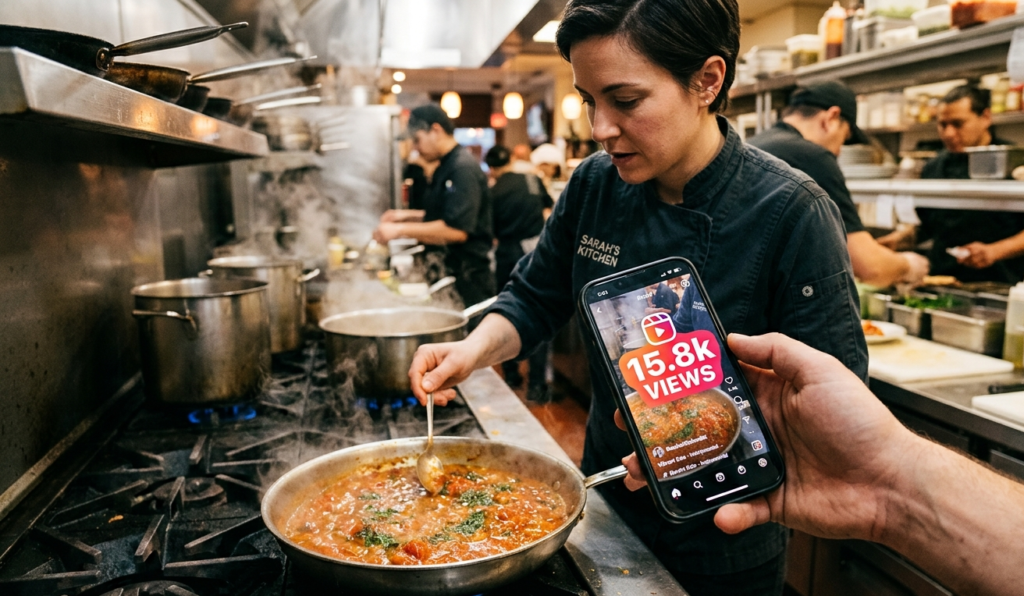
Reels are Instagram’s most powerful discovery tool right now. Unlike a photo post that mostly reaches your existing followers, a Reel can land on the Explore page. That means thousands of local people who have never seen your account can find you.
You do not need a film crew or a ring light. You need a phone, a plan and 30 seconds of something interesting happening in your restaurant. A time-lapse of Saturday prep works well. Or a slow zoom into a bubbling cast iron pan. Even a 10-second clip of your team plating a special can rack up thousands of views.
The hook matters most. The first two seconds must grab attention or people swipe past. Start mid-action rather than setting up the shot. Open with a flame, a pour or a full plate reveal. Then let the food do the rest of the talking.
Keep your Reels between 7 and 30 seconds for the best reach. Add captions because most people watch with the sound off. And always end with a call to action, like “link in bio to book a table this weekend.”
How to turn your Instagram bio and profile link into a table-booking machine
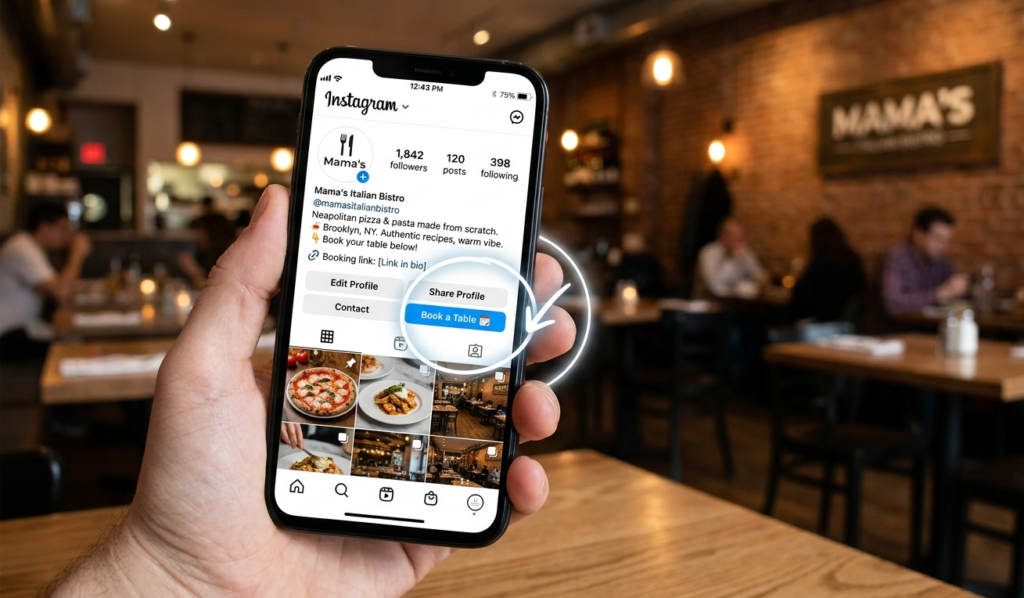
Most restaurants waste their Instagram bio. They write the address, a generic description and a phone number that nobody calls. Your bio has one job: tell a first-time visitor what you are and what to do next.
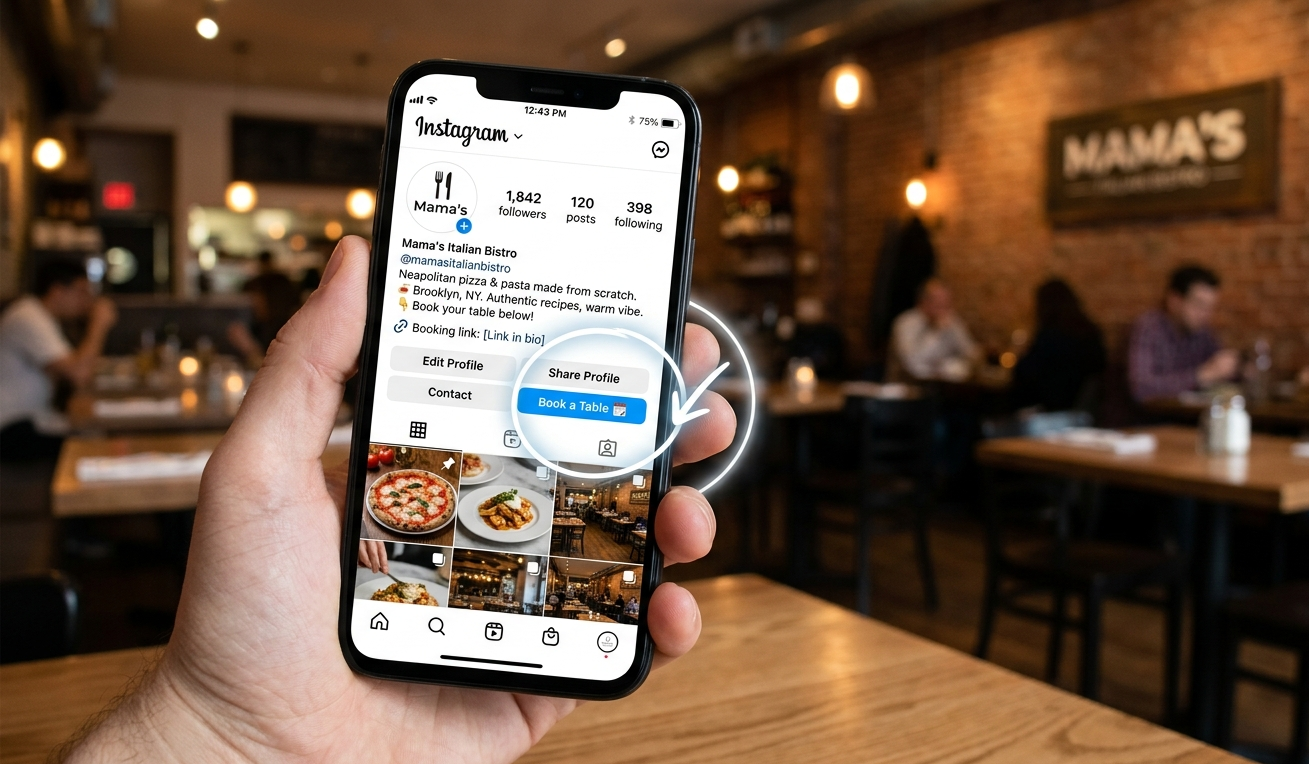
Write your bio like this: one line about your food or your vibe, one line about your location and one clear instruction. “Neapolitan pizza made from scratch. Brooklyn, NY. Book your table below.” That is all you need. Short, specific and easy to act on.
Your link in bio should go to a reservation page or a menu page, not your homepage. If someone clicks from Instagram, they are ready to decide. Send them to the page that helps them do that fastest. Tools like Linktree let you show multiple links if you need to offer both a menu and a booking option.
Also pin your three best posts to the top of your grid. First impressions matter on Instagram. Choose one post that shows your best dish, one that shows your space and one that shows real people having a good time. Those three posts sell the experience before anyone even reads your bio.
How to post consistently on Instagram when you are also running a full kitchen
The biggest social media problem for restaurants is not strategy. It is time. You have a kitchen to run, a team to manage and a hundred other things on your plate. Instagram often falls to the bottom of that list.
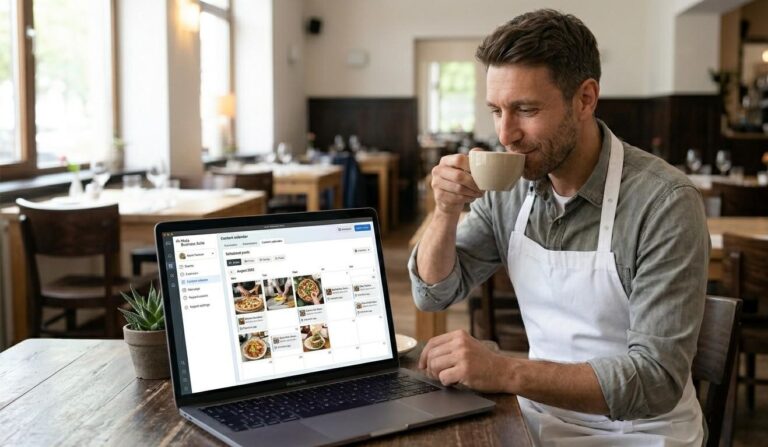
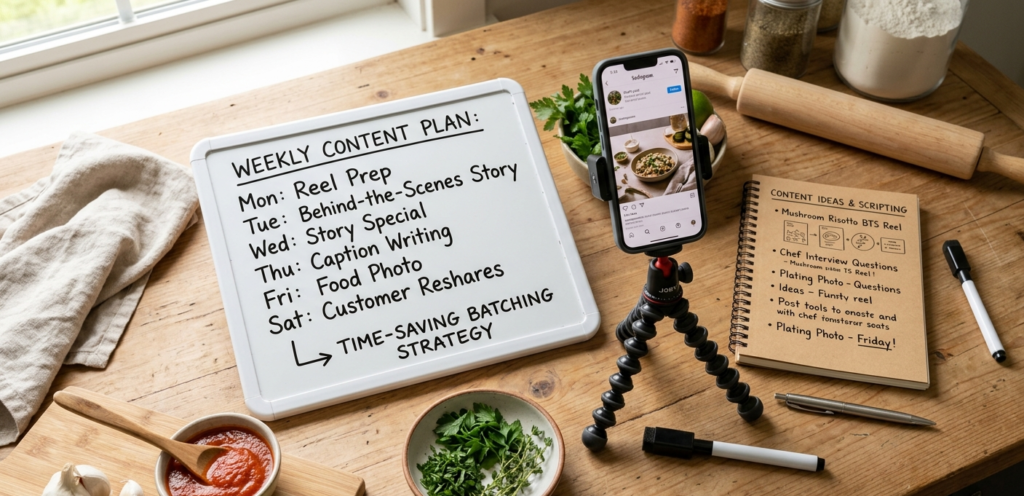
The answer is batching. Pick one day a week, usually a Monday or Tuesday, and film five to seven short clips. The goal is a system that keeps things moving without pulling you out of the kitchen every afternoon.
A simple weekly plan works well for most small restaurants. Post one Reel early in the week showing something from your kitchen. Share a Story or two mid-week with a daily special or a behind-the-scenes moment. Then post a strong food photo or piece of UGC on Thursday or Friday ahead of the weekend rush. Sprout Social’s food industry data [opens in new tab] shows Thursday and Friday afternoon posts earn the highest engagement for food businesses.
On top of batching, turn your phone into a content machine. Every time something interesting happens in your kitchen, hit record. You can decide later whether it is worth posting. Most of those clips will sit unused, but a few will be worth their weight in gold.
How to decide between TikTok and Instagram when your time is limited
Your time is limited. So picking the right platform matters. If you can only focus on one, start with Instagram. It has stronger local discovery through its Explore page and location tags. People actively search for restaurants by neighborhood on Instagram.
TikTok’s algorithm runs on interests, not location. So your ramen video might reach someone in another country who will never visit. That is fine for brand awareness, but it does less for local foot traffic than a well-targeted Instagram Reel.
That said, TikTok is a strong option if your food photographs well and you enjoy making short videos. Hootsuite’s TikTok comparison data [opens in new tab] shows TikTok users spend more daily time in the app. That means more chances for your content to catch someone’s eye.
The smartest move is to film once and post the same video on both platforms. TikTok and Instagram Reels share the same format. So you can build a presence on both without doubling your workload. Our social media management service handles cross-platform publishing for restaurants that do not have time to manage it in-house. Stop posting into the void and start posting with a plan. Browse our marketing blog for more restaurant growth guides, or check out our AI video content service if filming every week feels like too much. And when you are ready for a full content strategy, our restaurant marketing team is one call away.
Frequently Asked Questions
Q: What should restaurants post on Instagram?
The best content mix for a restaurant includes:
- Short Reels showing food being made or plated
- Behind-the-scenes clips of your kitchen or team
- Customer photos and reviews shared to your Stories
- Specials, seasonal dishes and limited-time offers
- A warm, real look at the people behind the restaurant
Aim for a mix of all five. Avoid posting only food photos. That content does not build trust the way other formats do.
Q: How often should a restaurant post on social media?
Four to five times per week is a strong target for most small restaurants. Posting every day often leads to rushed, low-quality content that hurts engagement. Consistency matters more than frequency. A well-planned four posts per week will outperform seven rushed ones. And your Stories can stay active daily with far less effort than a full grid post.
Q: Do Instagram Reels help restaurants get more customers?
Yes, they do. Reels reach people who do not already follow you, which makes them your best tool for local discovery. A well-made Reel showing your food can reach thousands of local people without any ad spend. Start with one Reel per week and build from there.
Q: What is the best time to post on social media for restaurants?
For restaurants, the best posting windows are Tuesday through Friday. Hit 10 AM to 12 PM and again from 5 PM to 7 PM on those days. These windows catch people when they browse their phones before meals. Sprout Social’s research on food businesses backs this with data from thousands of accounts.
Q: How do I grow my restaurant’s Instagram following?
Growing a following takes three consistent habits:
- Post Reels regularly since Reels reach the most new people
- Use local and food-specific hashtags so nearby people find your content
- Engage with other local accounts and reply to every comment you get
Buying followers does not work. Real growth comes from real content and real interaction over time.
Q: Is TikTok or Instagram better for restaurants?
Instagram wins for local discovery because people search for restaurants by neighborhood and location tag. TikTok wins for raw reach and entertainment value. Start on Instagram if you only have time for one. Once you have a content rhythm, post the same Reels to both. That doubles your reach with the same amount of work.