
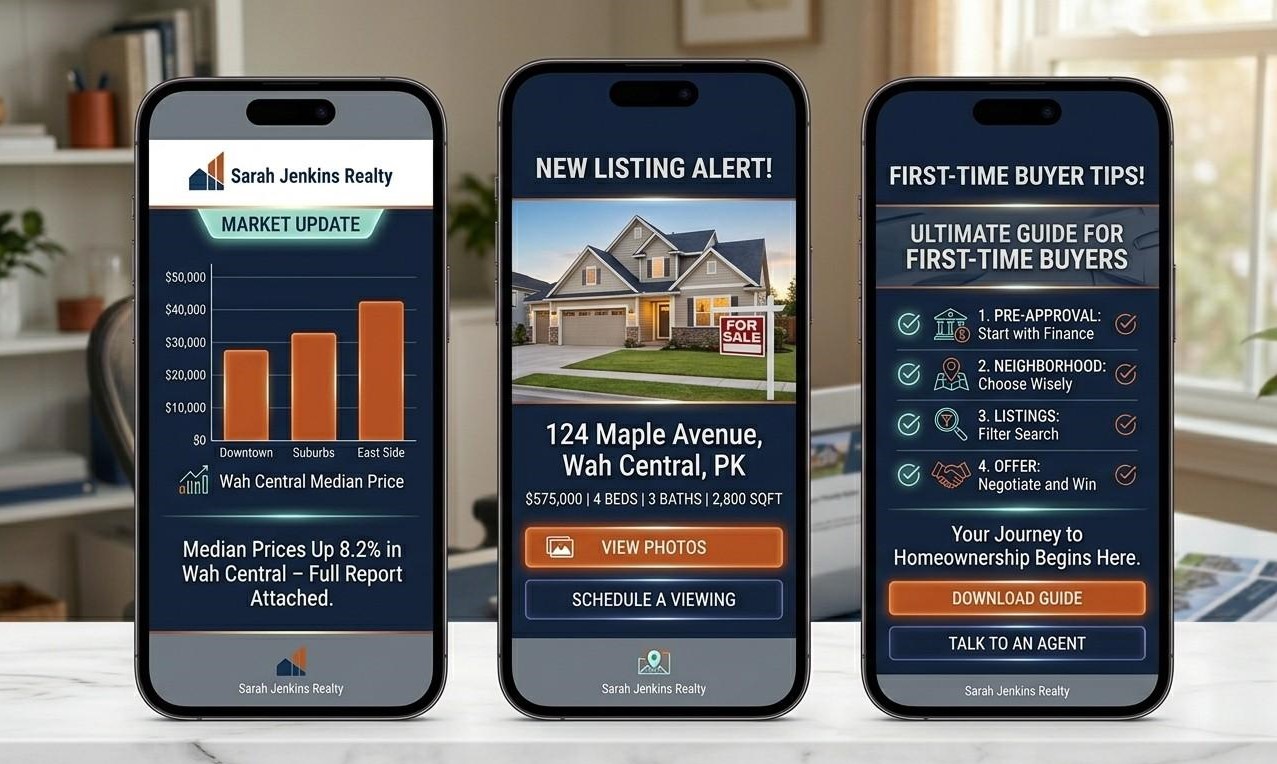
Quick answer — Email marketing for real estate agents works by building a permission-based list of buyers, sellers and past clients, then sending them relevant content on a consistent schedule. The foundation is a lead magnet that earns the email address, a welcome sequence that builds trust and a monthly market update that keeps you top of mind until the contact is ready to transact.
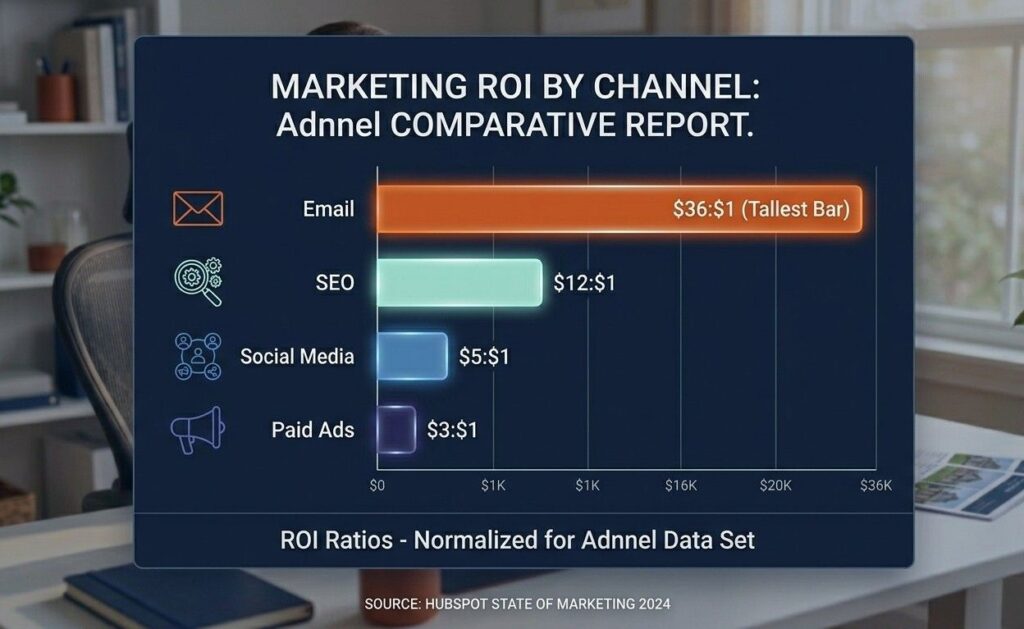
According to HubSpot’s State of Marketing 2024 Report, email marketing returns an average of $36 for every $1 spent — the highest ROI of any marketing channel tracked. Email marketing for real estate agents is particularly strong because your list owns itself. No algorithm change can cut your reach. No ad platform can raise its prices on you. Your email list is an asset you control completely.
- Email marketing for real estate agents returns $36 for every $1 spent, higher than any other marketing channel.
- Build your real estate email list with a free lead magnet, not a generic ‘subscribe to my newsletter’ form.
- Segment your list into at least three groups: active buyers, past clients and cold leads, and send different content to each.
- A monthly market update email with a specific local stat is the single highest-performing send type for realtors.
- Real estate drip emails automate your follow-up so no lead goes cold while you are focused on active clients.

Why Email Marketing for Real Estate Agents Outperforms Social Media
Social media reach is borrowed. Your Instagram followers belong to Instagram. If Meta changes its algorithm or raises ad costs, your visibility drops overnight. Your email list belongs to you. That ownership difference is the core reason email marketing for real estate agents produces results that social media cannot match consistently over time.
The ROI data reinforces this. HubSpot’s State of Marketing 2024 Report found that email marketing returns an average of $36 for every $1 spent. No other channel comes close. For a real estate agent spending $50 a month on an email platform, that implies a potential return of $1,800 before you account for the deal value at the end of the funnel.
The other advantage is timing. A buyer who is six months away from purchasing is not ready to respond to a “Call me now” social post. However, they will read a monthly market update email that keeps your name visible. Email nurtures long sales cycles in a way that social media posts, which vanish after 24 to 48 hours, simply cannot sustain.
Email also pairs directly with your SEO strategy. Our SEO guide for real estate agents covers how to bring people to your website. Email is what captures them once they arrive and keeps them engaged until they are ready to act.
How to Build a Real Estate Email List From Scratch
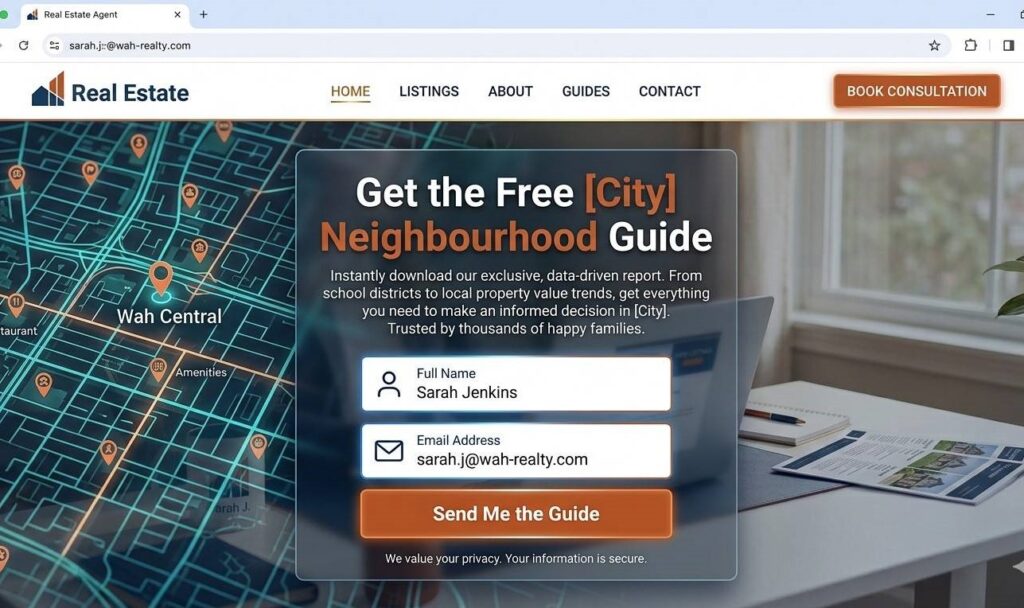
The fastest-growing real estate email list starts with a lead magnet, not a generic subscribe button. A lead magnet is something specific and valuable that a buyer or seller trades their email address to receive. Creating a high-value download is one of the most reliable ways to generate real estate leads online for free without relying on paid advertising.
Create a one-page neighbourhood guide covering median home prices, school ratings, commute times and local amenities for your top market area. Put it behind a simple opt-in form using a free tool like Mailchimp, ActiveCampaign or HubSpot’s free tier. Place that form on your website homepage, on your blog posts and in your Instagram bio link. Promote it once a week on social media.
Open house sign-in sheets are another under-utilised list-building tool. Instead of a paper sheet, use a tablet running a Google Form or a Mailchimp sign-up page. Ask for name, email and whether they are currently working with an agent. That last question is the most valuable data point on the sheet. It tells you immediately whether to send a buyer sequence or a nurture sequence.
Past clients are also a legitimate addition to your list, provided you ask their permission. A simple text or call asking “Mind if I add you to my monthly market update list?” converts at a very high rate from people who already trust you. Past clients are your most valuable re-engagement contacts and your most likely referral sources.
Why Segmenting Your Realtor Email List Matters More Than List Size
A list of 200 well-segmented contacts produces more business than a list of 2,000 generic ones. According to Mailchimp’s 2025 email marketing benchmarks, segmented campaigns earn 14.31% higher open rates than non-segmented sends. For real estate, the performance gap is even wider because the content needs are so different across contact types.
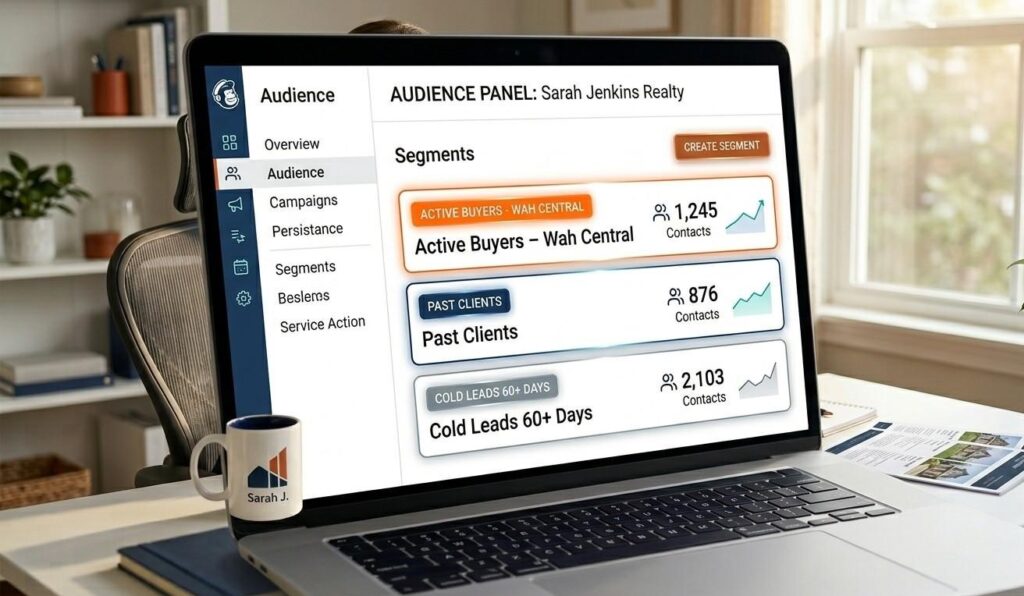
Start with three segments. The first is active buyers: people who have expressed current intent to purchase within the next three to six months. Send them new listing alerts, neighbourhood comparisons and market trend updates. The second is past clients: people who have already closed with you. Send them annual home value summaries and a check-in at the 12-month and 24-month anniversaries of their purchase. The third is cold leads: contacts who opted in but have not engaged recently. Send them lower-frequency content, specifically a monthly market update and nothing more.
Most email platforms make segmentation straightforward. In Mailchimp, you create Groups or Tags and assign them at sign-up or manually. In ActiveCampaign, you use Tags and Automations to move contacts between segments based on their behaviour. Either platform handles three basic segments with no technical expertise required.
Realtor Email Campaigns: The Four Types That Actually Generate Leads
Most realtors send one type of email: the new listing alert. It is the obvious choice. However, it also trains your list to think of you only when you have something to sell, which limits your relationship to transactional updates. A well-rounded realtor email campaign uses four distinct types.
The market update is your anchor send. Once a month, email a short summary of your local market: median sale price, average days on market, inventory levels and one observation about what it means for buyers or sellers right now. Keep it under 300 words. This positions you as a market expert rather than just a listing distributor.
The neighbourhood spotlight is a quarterly send. Pick one area you cover and write 200 to 300 words about what makes it interesting: a new coffee shop, a school rating change, a recent sales trend. This type of email generates high saves and forwards, which improves your sender reputation over time.
The testimonial or case study email is underused but highly effective. Share one client story per quarter: a buyer who found a home in a competitive market, or a seller who accepted an offer above asking price. A short story with a specific outcome converts fence-sitters better than any promotional email you can write.
For full content management across email and social media, our social media management service for real estate agents includes building the content calendar that feeds both channels consistently each month.
Real Estate Drip Emails: Automate Your Follow-Up Without Losing the Personal Touch
A drip sequence is a pre-written series of emails that sends automatically after a contact joins your list. Real estate drip emails solve the single biggest follow-up failure most agents have: the lead who fills in a form on your website at 11pm and never hears back until you remember them a week later.
Build a five-email welcome sequence. Email one sends immediately: welcome, introduce yourself and deliver the lead magnet they signed up for. Email two sends on day three: a brief market overview of your area with one specific data point. Email three sends on day seven: a neighbourhood guide for the area they expressed interest in. Email four sends on day fourteen: a buyer FAQ or seller FAQ depending on which segment they joined. Email five sends on day thirty: a soft check-in asking if they have any questions.
Set this up once in your email platform and it runs automatically for every new subscriber. The sequence takes about two hours to write and set up. After that, it works around the clock without any additional effort. Most agents who build a drip sequence report that leads start responding at the day-seven or day-fourteen email, long after they would have gone cold in a manual follow-up system.
Building the landing pages and lead capture forms that feed your drip sequence is part of our lead generation service for real estate agents. We set up the full top-of-funnel so your email list grows while you focus on active clients.
How to Write Real Estate Email Subject Lines That Get Opened
Your subject line determines whether your email gets opened or ignored. According to Mailchimp’s 2025 email benchmarks, the average open rate across industries sits at about 21%. A well-written subject line for a well-segmented real estate list should hit 28 to 35% consistently.
The subject lines that perform best for real estate are specific and local. “March Market Update” earns a mediocre open rate. “Homes in [Neighbourhood] dropped $12K this month” earns double the opens for the same audience. The difference is specificity. A local number in a subject line tells the reader immediately that this email is relevant to them and not a generic broadcast.
Avoid spam trigger words: free, limited offer, act now and anything with excessive capitalisation. These reduce deliverability before the email even reaches the inbox. Also avoid clickbait subject lines that promise something the email does not deliver. Your long-term open rates depend on trust, and a misleading subject line destroys trust faster than a poorly written email ever would.
Test subject lines by sending two versions to a small portion of your list before sending to everyone. Most email platforms include A/B testing as a standard feature. Over six months of consistent testing, you will build a clear picture of which framing, formats and local data points your specific list responds to most.
Start Building Your Real Estate Email List This Week
Email marketing for real estate agents is the channel that works while you are busy closing deals. Build your lead magnet, set up your drip sequence and send your first market update this month. (If you also manage or consult for other local industries, see our guide on email marketing for restaurants to see how local eateries use similar list-building systems). When you want the full system built for you, our real estate marketing team at Adnnel handles list building, content production and monthly sends. Book a free call today.
Written by Wajahat
Frequently asked questions
How do I build an email list as a real estate agent?
Start with a lead magnet: a free neighbourhood guide, a first-time buyer checklist or a local market report that contacts trade their email address to receive. Place the opt-in form on your website homepage, in your Instagram bio link and on your blog posts. Also collect emails at open houses using a tablet sign-in form rather than paper. Email marketing for real estate agents grows fastest when you offer something specific rather than a generic newsletter sign-up.
What emails should realtors send to prospects?
Send four types: a monthly market update with a specific local stat, a quarterly neighbourhood spotlight, a new listing alert when you have a property that matches their criteria and a quarterly client story or testimonial. Realtor email campaigns that mix educational content with listings consistently outperform listing-only sends because they position you as a market expert, not just a sales channel. Past clients should also receive an annual home value summary.
How often should a realtor send emails?
Send to active buyers and sellers once or twice a month. Send to past clients and cold leads once a month. Sending more than twice a week to any segment increases unsubscribe rates without proportional benefit. According to Mailchimp’s 2025 benchmarks, a 0.5% or higher unsubscribe rate per send signals frequency problems. Email marketing for real estate agents works best at a consistent, moderate cadence rather than bursts of high activity followed by long silences.
What email platform is best for real estate?
Mailchimp is the best starting point for most independent real estate agents. The free tier supports up to 500 contacts, includes basic automation and offers pre-built real estate templates. Once your list grows beyond 500 contacts or you need more advanced drip sequences, ActiveCampaign ($29 per month) adds powerful tag-based segmentation and behaviour-triggered automations. Both integrate with most real estate website builders. Choose based on your current list size and how complex your sequences need to be.
Does email marketing generate real estate leads?
Yes. Email marketing for real estate agents generates leads through three mechanisms: new opt-ins from your lead magnet, re-engagement of cold leads through drip sequences and referrals from past clients who stay connected through your regular sends. HubSpot’s State of Marketing 2024 Report found email returns $36 for every $1 spent on average. For real estate, where a single transaction generates thousands in commission, even a modest list producing one deal per quarter delivers a strong return.
How do I write a real estate email that gets opened?
Use a specific, local subject line rather than a generic one. “Homes in [Neighbourhood] dropped $12K this month” earns dramatically higher open rates than “March Market Update”. Keep the body under 300 words for most sends. Include one clear call to action per email, not three. Send from your personal name rather than your brokerage brand name, because people open emails from humans not companies. Test two subject line versions on a small segment before sending to your full list.