Quick answer — GEO for restaurants means optimising your online presence so AI engines like ChatGPT, Google AI Overviews and Perplexity recommend your restaurant when someone asks for dining options nearby. The three foundations are a fully optimised Google Business Profile, structured schema markup on your website and a steady flow of detailed customer reviews that give AI systems the language to describe your restaurant accurately.
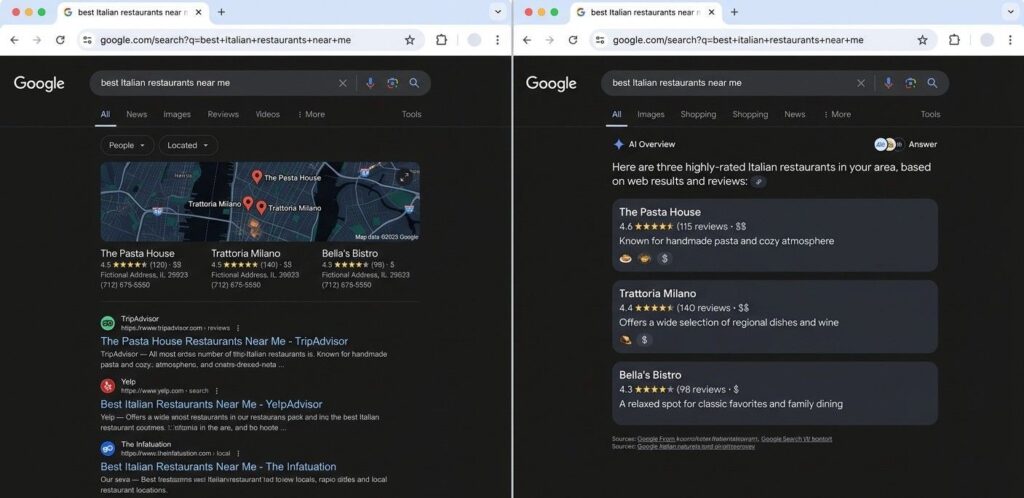
According to Uberall’s 2026 GEO Studio benchmark report, 83% of restaurants are invisible in AI search right now. That means when a diner opens ChatGPT or Google AI and asks “best Italian restaurant near me”, most restaurants never appear in the answer. GEO for restaurants is the practice of fixing that. And since almost no one has started yet, early movers have an unusually clear path to being the restaurant AI recommends first.
- GEO for restaurants means optimising your presence so AI engines cite your restaurant in generated answers.
- 83% of restaurants are currently invisible in AI search, which means early adopters face very little competition.
- Your Google Business Profile is the single highest-priority asset for AI search for restaurants.
- Restaurant AI citations depend on review volume, review recency and the descriptive detail inside each review.
- Restaurant menu optimisation for AI requires adding schema markup so search engines can read your dishes as structured data.
![A restaurant owner in their dining room holds a smartphone. The screen shows a ChatGPT or Google AI Overview response that reads 'Top Italian restaurants near you: [Name]...' The restaurant interior is warm and in soft focus behind them. Adnnel navy and burnt-orange colour accents visible on a nearby menu.](https://adnnel.com/wp-content/uploads/2026/06/1-4-1024x595.jpeg)
What GEO for Restaurants Actually Means
GEO stands for Generative Engine Optimization. Traditional SEO gets your website ranked in a list of links. GEO gets your restaurant cited inside an AI-generated answer, so when someone types “where should I eat tonight in [your city]” into ChatGPT or Google AI Overviews, your restaurant appears in the response text itself.
That distinction matters enormously. A user reading an AI answer is not scanning a page of links. They are reading a direct recommendation. If AI says “for wood-fired pizza in Midtown, try [your restaurant]”, the reader experiences that as a trusted suggestion, not a paid ad. The conversion rate from that kind of mention is significantly higher than a standard organic click.
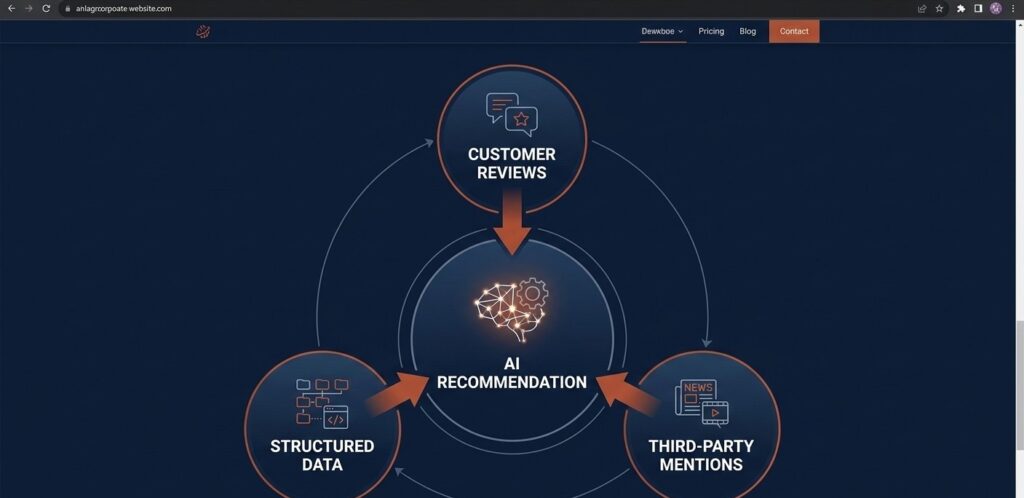
The catch is that AI engines do not pull recommendations from thin air. They synthesise information from your Google Business Profile, your website content, third-party review platforms, food blogs, local directories and social media mentions. GEO for restaurants means making sure all of those sources give AI enough material to include you, and that the material is accurate, current and specific.
For a broader overview of how GEO fits alongside traditional SEO and AEO, our guide on what generative engine optimization means for local businesses covers the full picture in plain language.
How AI Search for Restaurants Decides Who Gets Recommended
AI search engines use a confidence scoring process. They look for agreement across multiple independent sources. If your Google Business Profile says you serve brunch, your website confirms it, three review platforms mention your eggs benedict and a local food blogger wrote about your Sunday service last month, the AI reads that as a confident, verified signal. Your restaurant earns the citation.
The opposite is also true. If your website has not been updated since 2022, your Google Business Profile shows no hours and your last Google review is from 18 months ago, AI systems treat your listing as low-confidence. They route the recommendation to a competitor whose profile is more consistent and more recent.
Recency carries more weight in AI search than it does in traditional SEO. HubSpot’s analysis of GEO signals notes that AI models treat recent reviews as a confidence indicator for current customer experience. A restaurant that collected 400 reviews over five years can lose citation priority to one with 40 reviews from the past 60 days, because the recent reviews tell AI what the restaurant is like right now, not two years ago.
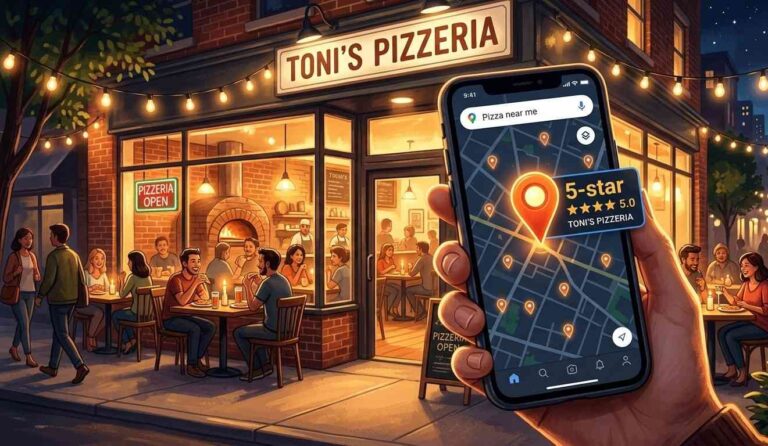
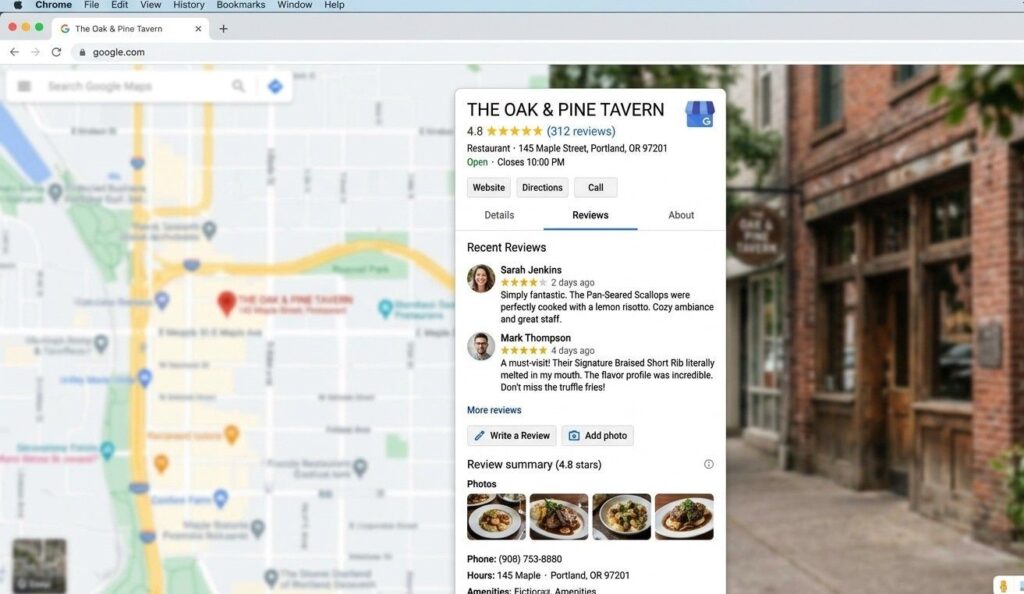
So the first action item for AI search for restaurants is this: treat your Google Business Profile like a live document, not a set-and-forget listing. Update your hours, add new photos monthly and respond to every review within 48 hours.
Reviews Are the Fuel Behind Restaurant AI Citations
Reviews do more for restaurant AI citations than almost any other signal. AI engines read review text to understand what your restaurant actually offers. A review that says “great food” gives AI almost nothing to work with. A review that says “the truffle pasta is made in-house and the service is fast even on a Friday night” gives AI the specific language to recommend your restaurant for the right query.
Your job is to make it easy for customers to leave detailed reviews. The simplest way is to ask at the right moment. After a table has clearly enjoyed their meal, your server can say: “We’d really appreciate a Google review. Even a sentence about your favourite dish helps a lot.” Most guests who had a good experience are happy to do it if someone asks directly.
Review platforms also matter beyond Google. Yelp, TripAdvisor and OpenTable reviews all feed into the third-party data layer that AI engines draw from. A strong presence on two or three platforms gives AI multiple independent sources to cross-reference, which increases your confidence score across the board.
Negative reviews handled well also help. An AI engine reading a negative review followed by a prompt, thoughtful owner response interprets that as a sign of a professionally managed business. That contributes positively to your overall trustworthiness signal.
Restaurant Menu Optimisation for AI: Schema Markup Explained
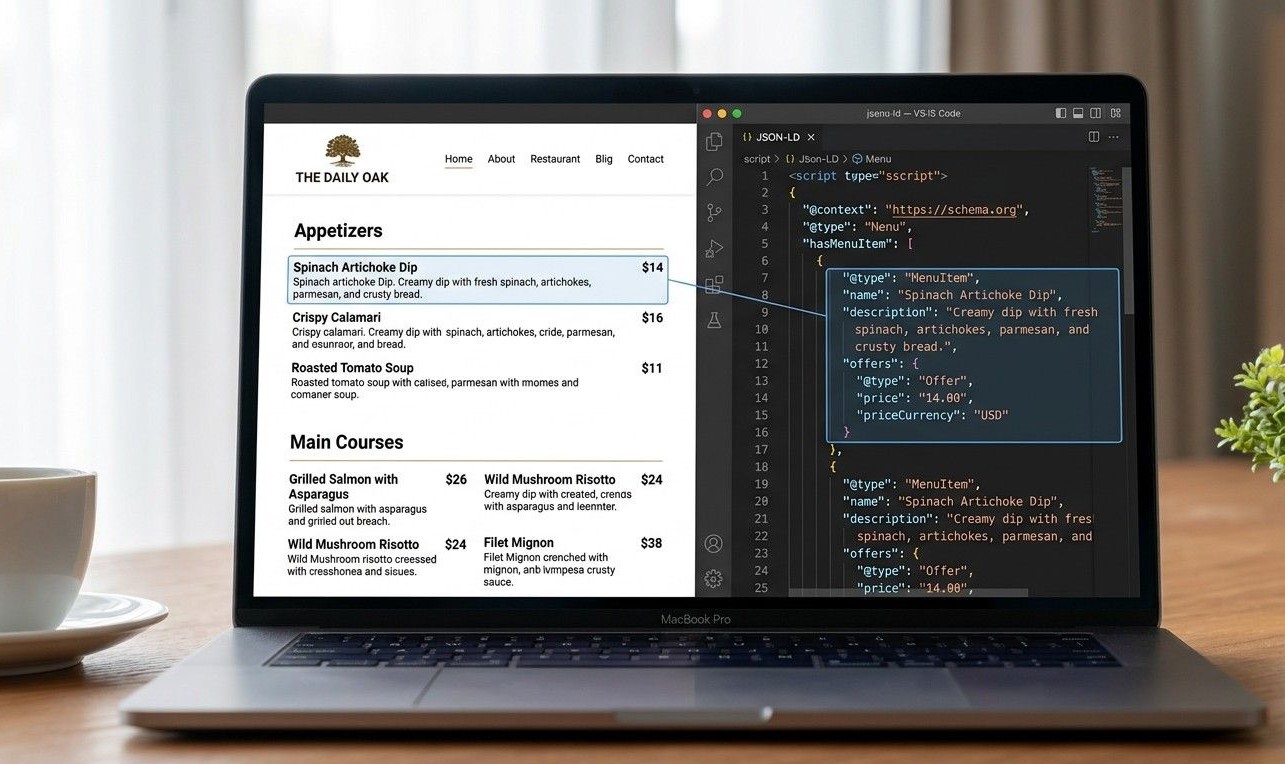
Schema markup is code you add to your website that tells search engines and AI systems exactly what your content means. Without it, an AI reading your menu page sees a wall of text. With it, the AI reads structured data: dish name, description, price, dietary tags and cuisine type.
The Restaurant schema type on Schema.org covers your business name, address, phone number, cuisine type, opening hours, price range and menu. The MenuItem schema covers individual dishes. Adding both to your website makes restaurant menu optimisation for AI straightforward. Google’s free Rich Results Test tool lets you check whether your schema is reading correctly after you implement it.
Most WordPress restaurants can add schema without touching code. Yoast SEO supports local business schema, and plugins like Schema Pro or Rank Math add restaurant and menu item types with a form-based interface. If your site runs on a platform like Squarespace or Wix, check their schema or structured data settings under SEO options.
One practical tip: write dish descriptions as full sentences, not just names. “House-made tagliatelle with slow-braised short rib, truffle oil and aged parmesan” gives AI much more to work with than “beef pasta”. That description becomes the language AI uses to recommend you when someone asks for rich pasta dishes in your city.
Content That Gets AI Search for Restaurants to Notice You
AI engines are trained on the web. The more web content that mentions your restaurant specifically and accurately, the more material the AI has to draw from. For independent restaurants, the most effective content types are neighbourhood guides, FAQ pages and menu-focused blog posts.
A neighbourhood guide published on your website might be titled “Best Places to Eat in [Your Neighbourhood] in 2026” and mention your own restaurant alongside a few non-competing local spots. That kind of content earns links from local directories, gets picked up by food bloggers and gives AI a detailed, context-rich source that names your restaurant in a relevant local frame.
FAQ pages on your website are particularly powerful for restaurant AI citations. AI Overviews strongly favour pages that answer questions directly and immediately. A page titled “FAQs About [Your Restaurant]” that answers questions like “do you take reservations?”, “what is your most popular dish?” and “do you have gluten-free options?” gives AI a clean, structured source to pull from when those questions appear in user prompts.
Short video content is also worth adding to the mix. HubSpot’s analysis of GEO citation sources found that video is the most frequently cited content format across AI platforms. A 60-second YouTube video of your kitchen, your team or a dish being prepared gives AI a third-party hosted source to reference, which strengthens your overall citation profile.
How Long GEO for Restaurants Takes and How to Track It
GEO does not produce overnight results, but it works faster than most owners expect once the foundations are in place. A restaurant that updates its Google Business Profile, adds schema markup and begins collecting weekly reviews typically starts appearing in AI-generated answers within 60 to 90 days.
Track your progress by testing the queries your ideal customer would type. Open ChatGPT, Perplexity and Google AI and ask: “best [cuisine type] restaurant in [your city]”. Do this once a month. Screenshot the results. If you are not appearing, check which competitors are and look at what their reviews say that yours do not.
Also monitor your Google Business Profile insights weekly. The “searches” metric shows how many people found your listing through direct and discovery searches. An upward trend in discovery searches, where people found you without knowing your name, is a signal that AI and local search visibility are improving together.
Our SEO, GEO and AEO service for local businesses includes full schema implementation, Google Business Profile management and monthly AI citation tracking. If you want the full picture of how your restaurant performs across both traditional and AI search, our restaurant marketing team can audit your current visibility in under a week.
Start Showing Up Where Diners Are Actually Looking
GEO for restaurants is the fastest-moving opportunity in local marketing right now, and 83% of your competitors have not started yet. Fix your Google Business Profile, add schema to your menu and build a review strategy this month. When you want an expert to handle the implementation, our Google Ads and restaurant marketing team at Adnnel can audit your current AI visibility and build a GEO action plan in one week. Book a free call today.
Frequently asked questions
What is GEO and how does it help restaurants?
GEO, or Generative Engine Optimization, is the practice of optimising your restaurant’s online presence so AI engines like ChatGPT, Google AI Overviews and Perplexity recommend you in their generated answers. For restaurants, GEO for restaurants works by strengthening the signals AI systems read: your Google Business Profile, review volume and recency, schema markup on your website and third-party mentions across food directories and local media.
How do I get my restaurant mentioned in ChatGPT or Google AI?
Start with three steps. First, fully complete and actively manage your Google Business Profile: update your hours, add photos monthly and respond to every review. Second, add restaurant and menu item schema markup to your website so AI can read your dishes as structured data. Third, build review volume on Google, Yelp and TripAdvisor with detailed, specific descriptions. AI search for restaurants draws on all three sources simultaneously to decide who earns a mention.
What content makes a restaurant appear in AI search answers?
Restaurant AI citations favour four content types: detailed customer reviews that name specific dishes, structured FAQ pages on your website that answer common dining questions directly, neighbourhood guide posts that place your restaurant in a local context and short-form video on YouTube. AI engines cross-reference multiple sources, so the more places your restaurant appears with accurate, specific information, the more confident the AI is in recommending you.
Is GEO replacing Google Maps for restaurant discovery?
GEO is not replacing Google Maps. It is adding a new discovery layer on top of it. Diners still use Google Maps to find directions and check hours. However, AI Overviews and conversational AI tools like ChatGPT now intercept more and more discovery queries before a user even reaches the map. GEO for restaurants means you appear in both layers: the AI answer and the map result. Optimising your Google Business Profile well serves both at the same time.
How do I optimise my restaurant menu for AI search?
Restaurant menu optimisation for AI requires two things. First, add MenuItem schema markup to your menu page using a plugin like Schema Pro or Rank Math, which lets you input dish names, descriptions, prices and dietary tags as structured data. Second, write each dish description as a full sentence rather than a label. “Hand-cut chips with smoked paprika aioli” is far more useful to an AI engine than “fries”. Specific descriptions become the language AI uses to match your menu to relevant search queries.
How long does it take for a restaurant to appear in AI Overviews?
Most restaurants that implement GEO foundations correctly start appearing in AI-generated answers within 60 to 90 days. The fastest results come from restaurants that update their Google Business Profile immediately, add schema markup in the first two weeks and begin collecting detailed reviews consistently. Test your visibility monthly by searching for your cuisine type and city in ChatGPT, Perplexity and Google AI. Track the results over time so you can see what is working.