Quick answer — Online reputation management for restaurants bad reviews starts with a calm, specific public response within 24 to 48 hours, then a private follow-up to fix the issue offline. Flag only reviews that violate Google’s policies, such as fake or spam content, since genuine negative feedback almost never qualifies for removal. According to BrightLocal’s 2026 Local Consumer Review Survey, 81% of consumers now expect a review response within a week, so speed and tone both matter.
A single one-star review just landed on your restaurant’s Google profile and your stomach is in knots. Online reputation management for restaurants bad reviews is not about making the bad review disappear. It is about responding the right way, fast enough, so future customers see a business that takes feedback seriously instead of one that panics.
- Online reputation management for restaurants bad reviews works best when you respond publicly within 24 to 48 hours and move the resolution offline.
- Only fake, spam or policy-violating reviews qualify for removal. Genuine negative feedback, even if it stings, stays up.
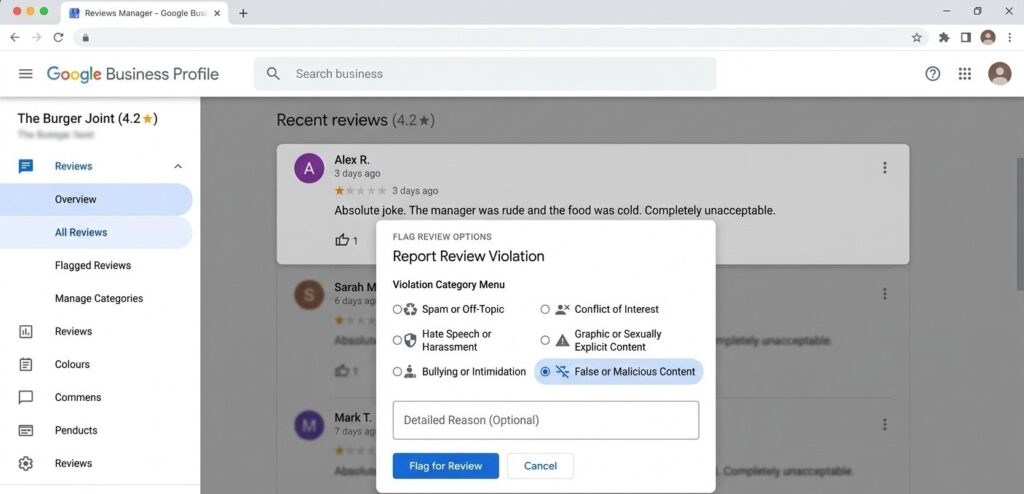
- Flag suspicious reviews directly through your Google Business Profile dashboard and choose the specific violation category, not just ‘I disagree.’
- BrightLocal’s 2026 data shows 31% of consumers will only use a business with 4.5 stars or higher, up sharply from 17% the year before.
- Asking every customer for a review, not just happy ones, keeps your rating authentic and avoids violating Google’s review gating policy.
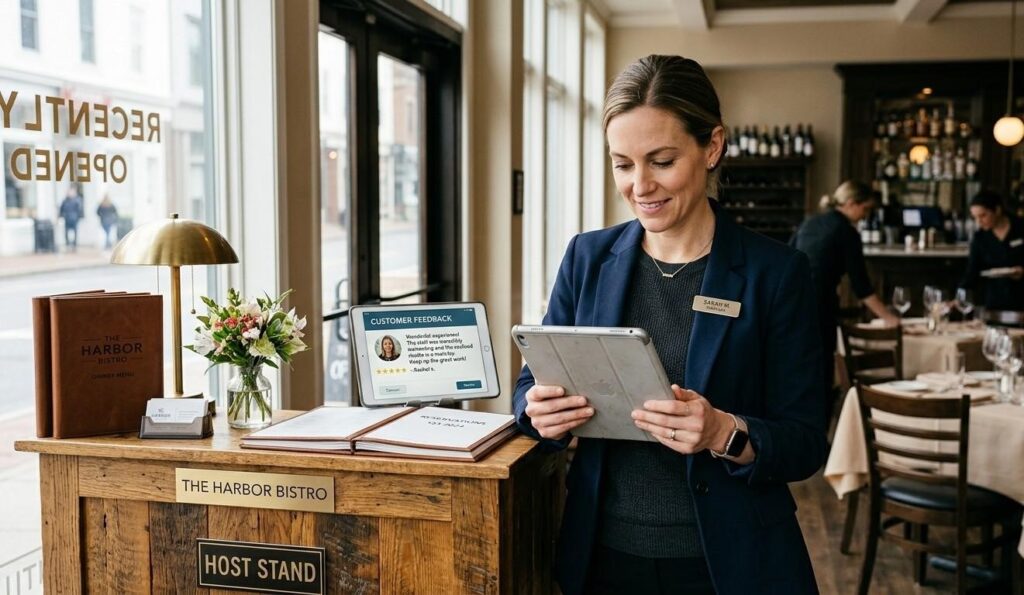
Why Bad Reviews Hit Restaurants Harder Than Other Businesses
Restaurants live and die by first impressions formed before anyone walks through the door. Someone scrolling Google for dinner options reads your rating, glances at the most recent review and decides in seconds whether to book a table. That makes online reputation management for restaurants bad reviews a different challenge than it is for, say, a plumber or an accountant.
According to BrightLocal’s 2026 Local Consumer Review Survey, 31% of consumers will only consider a business with 4.5 stars or higher, a sharp jump from 17% the previous year. Seven in ten consumers now require at least four stars before they will even consider a business. For a restaurant sitting at 4.1 stars because of three unanswered bad reviews, that threshold can quietly cost real reservations every single week.
The good news is that response strategy matters as much as the review itself. A thoughtful, specific public reply signals to every future reader that your team takes feedback seriously. That single habit, done consistently, can offset the damage of an occasional bad review far more effectively than chasing removal ever will.
Should You Respond to Every Negative Review?
Yes, and the data backs this up clearly. BrightLocal’s 2026 survey found that 19% of consumers now expect a same-day response to their review, up from just 6% the year before, while 32% want a reply by the following day. Ignoring a negative review is no longer a neutral choice. It actively signals that nobody is paying attention.
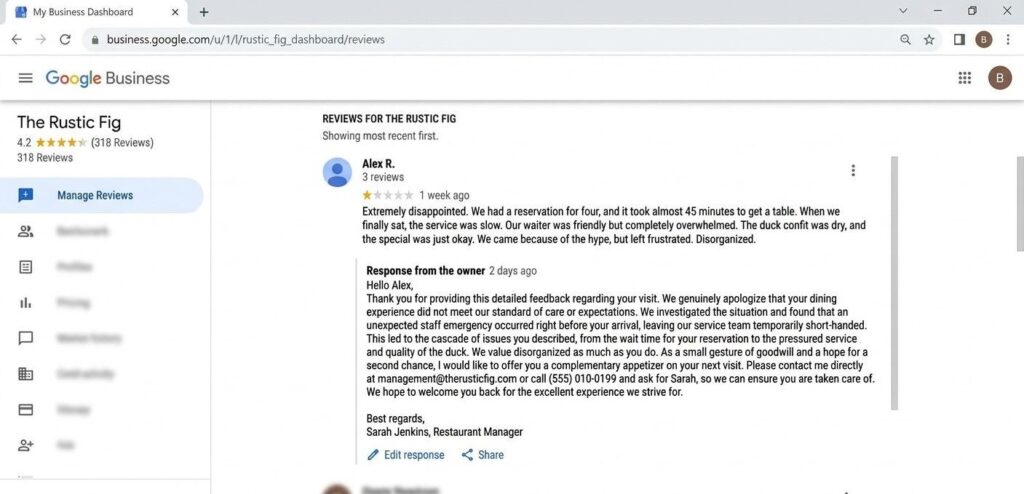
Write a public response that names the specific issue, avoids defensiveness and offers a path to make it right. Keep it under 100 words. Something like: “Thank you for the honest feedback, [Name]. We fell short on wait time last Friday and that is on us. Please reach out to [email/phone] so we can make it right.” That response does two things at once. It shows future readers you are accountable, and it moves the actual resolution into a private channel where things rarely escalate further.
Avoid generic, copy-pasted replies. BrightLocal’s 2026 research specifically warns that templated responses hurt trust more than no response at all. Personalize every reply, even if it takes an extra minute.
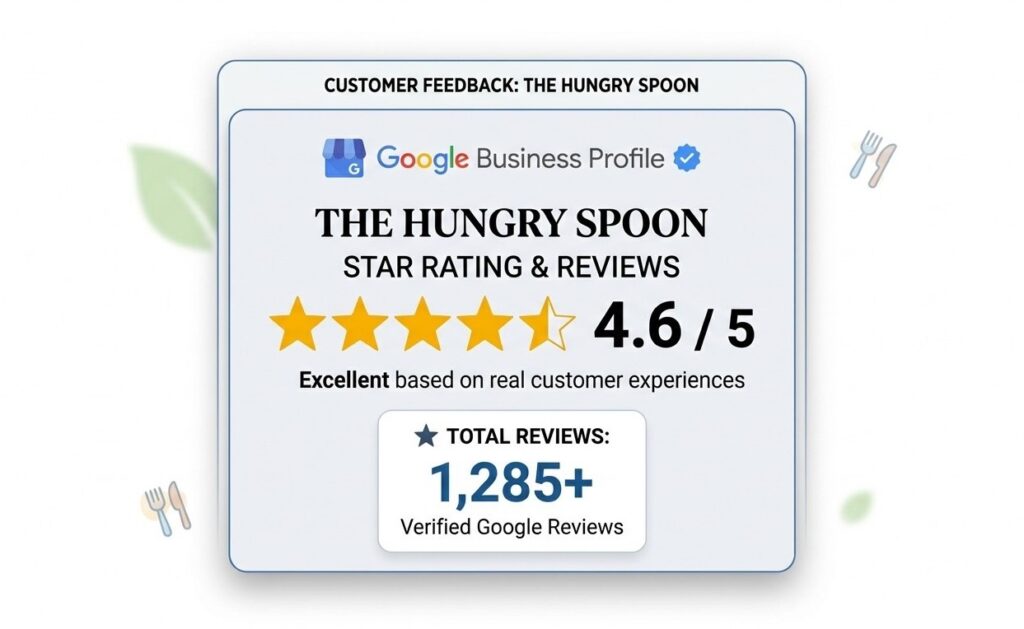
Can You Actually Get a Fake Negative Review Removed?
What Qualifies for Removal
Google removes reviews only when they break a specific policy, not because they are unfair or harsh. Google’s own Business Profile Help documentation lists spam, fake content, conflict of interest, off-topic content, profanity and harassment as the categories eligible for removal. A genuine one-star review from someone who really ate at your restaurant and disliked the food does not qualify, no matter how unfair it feels.
How to Flag a Fake Review Correctly
Open your Google Business Profile, find the review under Reviews, click the flag icon and select the specific violation category that applies. Vague flags get rejected fast. Strong flags include evidence: no matching reservation or order record, a reviewer account with no history, or several suspicious reviews arriving within hours of each other.
Google’s standard review evaluation takes three to seven business days. If your flag gets rejected, you get one appeal. Save your evidence, including screenshots and timestamps, before you submit anything, since you cannot add documentation after the fact.
Dealing With a Review That Is Completely Untrue
A review claiming food poisoning that never happened, or describing a visit on a day your restaurant was closed, falls into a different category than ordinary criticism. These are factual misrepresentations, and Google treats them as policy violations when you can prove the visit never occurred.
Pull your reservation system, POS records or delivery logs for the date in question. If there is no match for the reviewer’s name, time or order, attach that documentation to your flag. Google’s policy guidance notes that flags backed by specific evidence get evaluated more thoroughly than vague disagreements.
While the flag is pending, still respond publicly. State the facts calmly without accusing the reviewer of lying outright. Something like: “We have no record of a visit matching this description on the date listed. We would welcome the chance to look into this directly, please contact us at [phone/email].” This protects your reputation with readers even before Google rules on the flag.
Building a Steady Flow of Positive Reviews
When learning how to get more 5 star reviews for your restaurant, remember that the fastest way to recover from a bad stretch of feedback is volume, not removal. BrightLocal’s 2026 survey shows consumers now use an average of six review sites before deciding, so a strong, consistent flow of new positive reviews across platforms outweighs any single bad one over time.
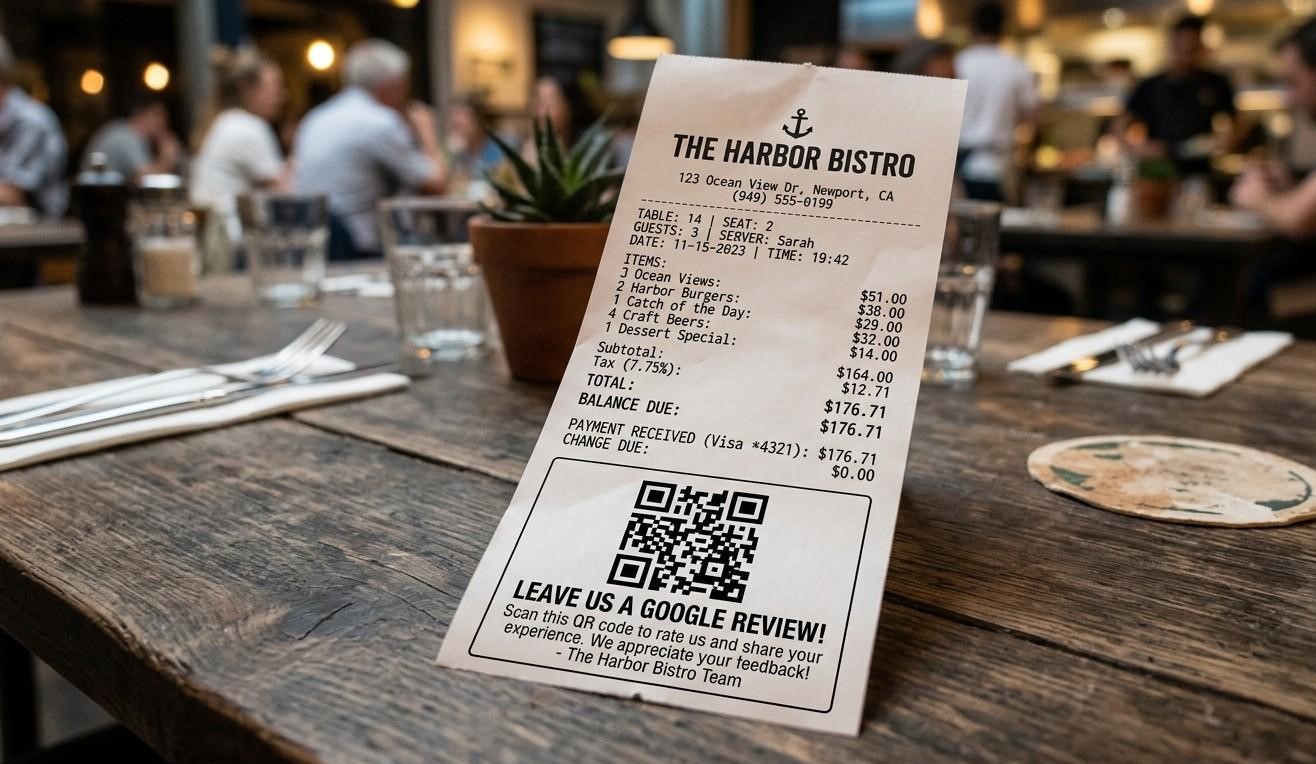
Ask every customer for a review, not just the ones who seemed happy. Filtering who you ask, known as review gating, violates Google’s Fake Engagement policy and can result in your entire profile being restricted. Use a simple QR code on the receipt or a follow-up text after a reservation. Make the ask consistent, automatic and identical for every table.
Train your staff to mention reviews naturally at the end of a good interaction. A server saying “if you enjoyed tonight, a Google review really helps us out” produces far more reviews than a sign by the register that nobody reads. For a structured approach to building review volume alongside other local visibility tactics, our SEO and GEO optimization service covers how reviews factor into local search rankings.
Does Responding to Reviews Actually Help Your Google Ranking?
Yes, though indirectly. Google has confirmed that review quantity, quality and recency all factor into local search rankings. If your goal is learning how to rank higher on Google Maps for local businesses, responding to reviews sends key engagement signals to Google that correlate directly with stronger local pack visibility.
There is also a behavioral effect. Restaurants that respond consistently tend to receive more reviews overall, since customers see an active, engaged business and feel their feedback will actually be read. That creates a compounding effect: more reviews lead to a stronger rating, a stronger rating lifts conversion, and a higher click-through rate from search results signals relevance back to Google. For restaurants building a complete local visibility strategy, mastering SEO for restaurant websites works hand-in-hand with review management and paid search as one connected system.m.
Turn Your Reviews Into a Growth Channel
Online reputation management for restaurants bad reviews comes down to fast, calm responses and a steady flow of new reviews, not chasing removals that rarely succeed. If you want a system that handles review responses, flags genuine violations and builds review volume month over month, our restaurant marketing team at Adnnel builds exactly that. Reach out today and we will review your current rating and response history at no cost.
Written by Wajahat
Frequently asked questions
Should I respond to every negative review of my restaurant?
Yes. BrightLocal’s 2026 research shows 81% of consumers expect a response within a week, and ignoring reviews signals you are not paying attention. Online reputation management for restaurants bad reviews means replying within 24 to 48 hours with a specific, calm response that names the issue and offers a way to resolve it privately. Skipping responses, even on harsh reviews, costs you more trust than the original review did.
Can I get a fake negative review removed from Google?
Yes, but only if it violates Google’s specific content policies, such as being fake, spam or from someone who never actually visited. Google’s Business Profile Help documentation confirms genuine negative experiences do not qualify for removal, even if they feel unfair. Flag the review through your profile dashboard, select the correct violation category, attach evidence like missing reservation records, then wait three to seven business days for evaluation.
How do I ask customers for positive reviews?
Ask every customer the same way, every time, regardless of how the visit went. Use a QR code on receipts, a follow-up text after reservations, or a verbal ask from staff after a good interaction. Filtering who you ask based on expected sentiment violates Google’s Fake Engagement policy and risks a profile restriction. Consistency in asking produces a steadier, more authentic flow of reviews than chasing only happy customers.
Does responding to reviews help Google ranking?
Yes, indirectly. Google considers review quantity, quality and recency as local ranking signals, and actively managed profiles tend to attract more reviews over time. Restaurants that respond consistently see stronger engagement, which supports visibility in local search results. Online reputation management for restaurants bad reviews is not just about damage control. It is part of the same system that drives local search performance.
How do I deal with a review that is completely untrue?
Pull your reservation, POS or delivery records for the date mentioned in the review. If there is no match, flag the review through Google with that evidence attached, since vague flags without proof rarely succeed. While the flag is under review, post a calm, factual public response stating you found no record of the visit. This protects your reputation with future readers even before Google makes a final decision on the flag.
What is the best way to improve my restaurant’s overall rating?
Combine two things: respond to every existing review, positive and negative, and ask every customer for a new one consistently. BrightLocal’s 2026 data shows 31% of consumers now require 4.5 stars or higher before considering a business, so volume and recency both matter. A steady stream of new positive reviews dilutes the visible weight of any single bad one over time, which is more effective than fighting to remove every negative review you receive.