Quick answer — Facebook ads for restaurants work by serving paid posts to local audiences on Facebook and Instagram based on location, age, interests and behaviour. You set a daily budget, choose an objective (awareness, traffic or leads), upload your creative and let Meta’s algorithm find people most likely to visit. Most restaurant owners see results with as little as $10 to $15 per day.
WordStream’s 2025 Facebook Ads Benchmarks report shows the average cost per lead for Restaurants and Food on Facebook is $3.16 — the lowest of any industry, well below the $27.66 all-industry average. Facebook ads for restaurants are among the cheapest paid media options available. Yet most independent owners either skip them entirely or waste their first budget because nobody told them how the setup actually works.
- Facebook ads for restaurants cost an average of $3.16 per lead — the lowest cost per lead of any industry on the platform.
- Start with the Traffic or Awareness objective before running lead ads; cold audiences need to see your food first.
- Restaurant Facebook ad targeting works best with a 5 to 8-kilometre radius and interest layers like ‘dining out’ and ‘local events’.
- A facebook ad budget for restaurants of $300 per month is enough to test and see real results in most local markets.
- Track cost per result and link clicks inside Meta Ads Manager weekly, not monthly, so you can cut losing ads fast.
Why Facebook Ads for Restaurants Outperform Most Other Paid Channels
Restaurant marketing has a geographic problem. You do not need to reach everyone. You need to reach the 50,000 people who live, work or commute within a few kilometres of your location. Facebook’s ad platform is built for exactly that kind of precision. No other paid channel matches it for local audience control at a low cost.
Google Ads targets people who are already searching for something specific. That is powerful but expensive, with an average CPC of $4.66 across all industries according to WordStream’s 2025 benchmark data. Facebook ads for restaurants work at a different point in the journey. They surface your food to local people before they have made a dinner decision, which means you are shaping the decision rather than competing for it after it is already forming.
The visual nature of the platform also plays to your strengths. A well-shot photo of your signature dish in someone’s Facebook or Instagram feed is the closest thing to having that dish placed in front of them. No other ad format recreates that moment as naturally. So even a modest daily budget can generate meaningful awareness in your immediate area if your creative is strong.
For a broader picture of how paid channels fit into a restaurant’s full marketing mix, our restaurant marketing service page covers the full stack from social ads to SEO and reviews.
Choosing the Right Meta Ads Objective for Your Restaurant
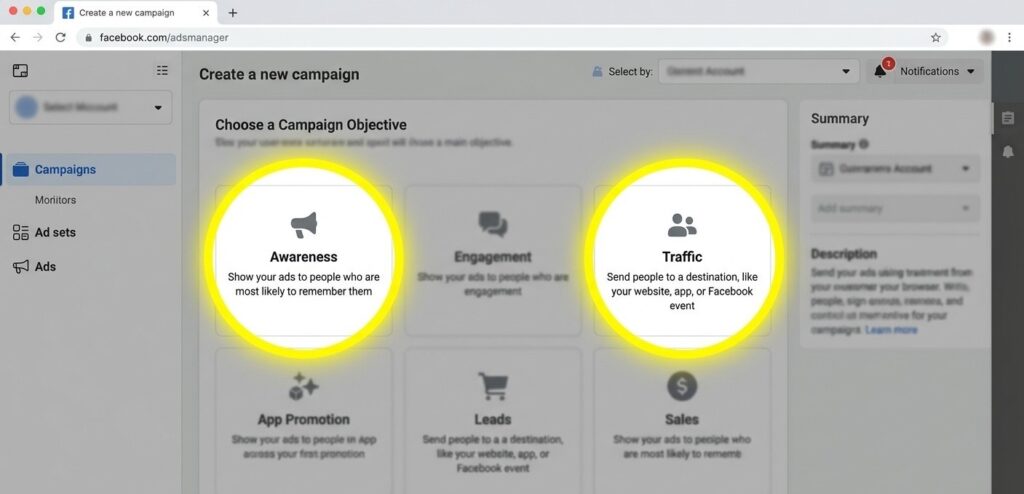
The biggest mistake first-time advertisers make is jumping straight to a leads or conversions campaign before their audience knows who they are. Meta ads for restaurants work in stages, and matching the right objective to the right stage saves a significant amount of wasted spend.
Start with Awareness or Traffic. An Awareness campaign maximises the number of people who see your ad. A Traffic campaign sends people to your website or menu page. Run one of these for two to three weeks in your target area. Your goal at this stage is brand recognition: you want local diners to see your food at least three times before you ask them to do anything.
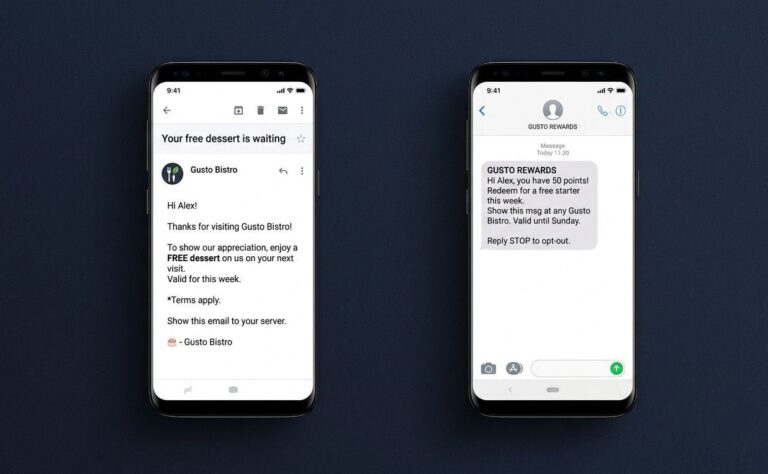
After that initial awareness phase, switch to a Leads campaign. Facebook Lead Ads let users submit their name and email without leaving the app. For restaurants, a useful lead magnet is a discount code or a free starter with a first visit. This builds your contact list and creates a retargeting audience at the same time.
The Engagement objective is a trap for most restaurant owners. Likes and comments feel good but they do not fill tables. Skip it in favour of Traffic or Leads, which produce measurable outcomes you can link back to actual revenue.
Restaurant Facebook Ad Targeting: How to Find the Right Local Audience
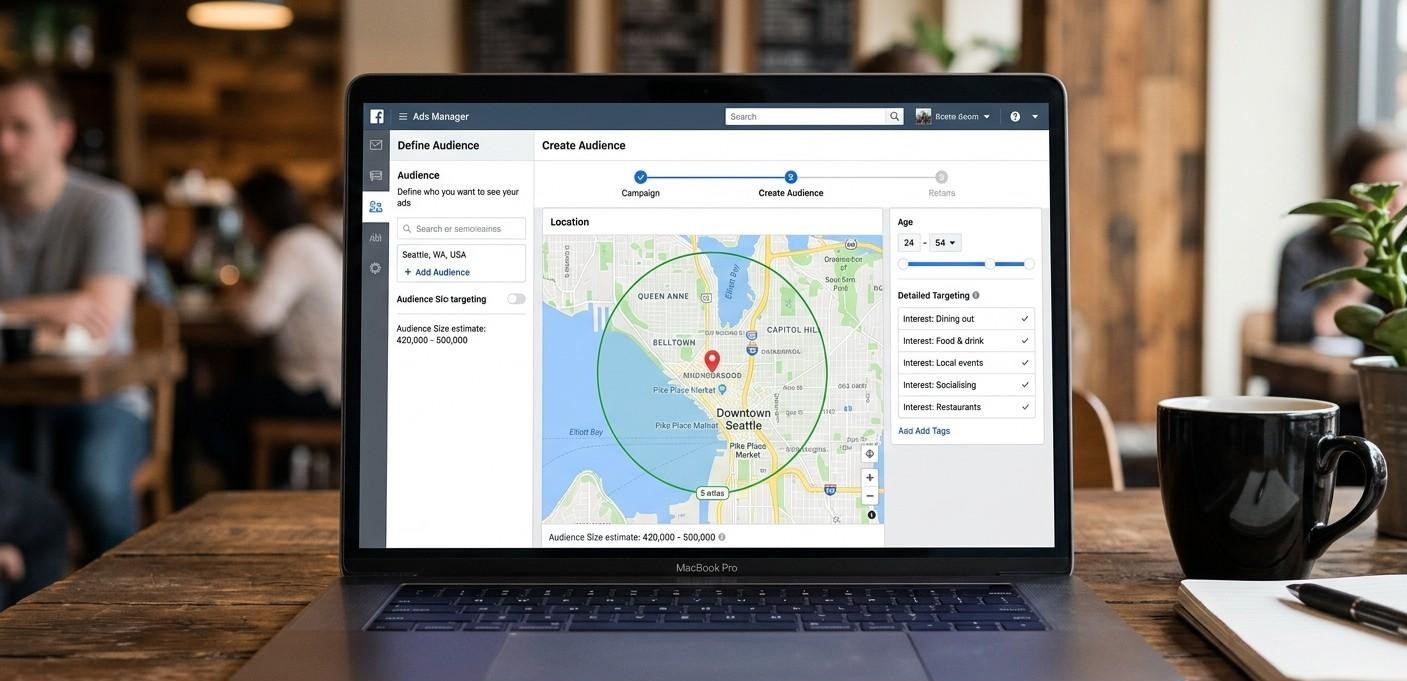
Restaurant Facebook ad targeting starts with geography. Set your location to a radius around your restaurant. For most urban or suburban restaurants, 5 to 8 kilometres covers the realistic drive-to-dine catchment area. If you are in a dense city centre, drop that to 3 to 4 kilometres. More reach is not always better; you want people who will actually make the trip.
On top of the location radius, layer in interest targeting. Facebook lets you target people who have shown interest in categories like ‘dining out’, ‘food and drink’, ‘local events’ and specific cuisines relevant to your menu. You can also target by demographics. A family-friendly pizza restaurant targets parents aged 28 to 45 differently than a date-night wine bar targeting 30 to 55-year-olds with interests in fine dining and craft cocktails.
Lookalike audiences are one of the most underused targeting options for independent restaurants. Once you have 100 or more people who engaged with your page or visited your website, Meta can build a lookalike audience of people with similar profiles in your area. These tend to outperform cold interest-based targeting because Meta does the profiling work for you.
Retargeting is the other advanced layer worth adding from month two onward. You retarget people who visited your website, engaged with your Facebook or Instagram posts or watched at least 50% of one of your videos. These people already know who you are, so your conversion rate on retargeted ads is typically three to five times higher than cold traffic.
Setting Your Facebook Ad Budget for Restaurants Without Wasting Money
A facebook ad budget for restaurants does not need to be large to produce results. Start with $10 per day and run a single campaign for 30 days. That is $300 for the month. At that spend level you are generating enough impressions and data to see what is working before you scale up.
Split your first month’s budget across two ad sets: one targeting cold local audiences with a food photo or short video, and one retargeting anyone who engaged with your content or visited your website. Give each ad set $5 per day. After 14 days, check your cost per link click and your reach. If one ad set is delivering at a significantly lower cost, shift more budget toward it.
Avoid the common mistake of running too many ads at too small a budget. Meta’s algorithm needs roughly 50 results per week to optimise properly. If you spread $300 across five different campaigns, each one starves for data. One or two focused campaigns get more signal faster and improve faster as a result.
Scale up in 20% increments. So if your $10-per-day campaign is performing well in week three, move to $12, then $14. Doubling a budget overnight disrupts the algorithm’s learning phase and usually causes your cost per result to spike temporarily.
What to Put in Your Restaurant Facebook Ad Creative
Your creative is the single biggest variable in your Facebook ad performance. Two identical campaigns with the same targeting and budget will produce very different results based on the image or video used. For restaurants, the creative rule is simple: show the food, not the room.
A clean, close-up photo of your most visually striking dish almost always outperforms a wide-angle shot of your dining room. Natural light at lunch service or a ring light in the evening produces better results than professional studio setups. Phones shoot well enough. What matters is that the food looks real, fresh and immediately appetising.
Short videos outperform static images for reach, especially since Meta now prioritises Reels inventory. A 10 to 15-second clip of a dish being plated, a sauce being poured or a dessert being cut open earns significantly more impressions for the same budget. You do not need editing software. Film vertically on your phone and upload directly.
For a full breakdown of what works on Instagram’s visual format, our Instagram marketing guide for small restaurants covers creative formats, caption writing and Reel production from scratch.
How to Track Whether Facebook Ads Are Actually Working for Your Restaurant
Meta ads for restaurants produce results you can measure if you know where to look. Inside Meta Ads Manager, check three numbers every week: cost per link click, reach and cost per result (for lead campaigns, this is cost per lead).
Cost per link click tells you whether your creative and targeting are compelling enough to drive action. For the Restaurants and Food industry, anything under $1.00 is solid, based on WordStream’s 2025 benchmark data. A cost per click above $2.00 signals a creative problem, a targeting problem or both.
For lead ads, track cost per lead against the average value of a new customer. If your average table spend is $80 and you are acquiring leads at $4, even a 25% conversion rate from lead to visit produces a positive return. Write that math out before you run the campaign so you know what a winning result looks like.
Install the Meta Pixel on your restaurant website. This small piece of code tracks which website visitors came from your ads and what they did when they got there, including whether they viewed your menu or clicked your booking link. Without the Pixel, your attribution is incomplete and you are flying blind on ROI.
If you want professional tracking set up alongside full campaign management, our social media management service for restaurants includes Meta ad setup, Pixel installation and monthly reporting.
Get Your First Restaurant Facebook Ad Live This Week
Facebook ads for restaurants are one of the lowest-cost ways to fill tables with local customers who have never heard of you yet. Start with $10 a day, one strong dish photo and a 5-kilometre radius. When you are ready to hand the setup to someone who does this full time, our Google Ads and paid social team at Adnnel manages Meta campaigns for independent restaurants from strategy to daily optimisation. Book a free 30-minute call today.
Frequently asked questions
How much should a restaurant spend on Facebook Ads?
Start with $10 per day ($300 per month) for your first month of Facebook ads for restaurants. That is enough to generate real data without overcommitting before you know what works in your market. Once you find an ad combination that delivers strong results, scale up in 20% increments week by week rather than doubling overnight, which disrupts the algorithm’s learning phase and spikes your costs temporarily.
What is the best Facebook Ad type for restaurants?
For most restaurants, short video ads and single-image food photo ads produce the best results. Short video ads earn more reach for the same budget because Meta prioritises video, especially Reels. Single-image ads with a clean dish photo and a clear call to action work well for retargeting. Start with a food photo in week one. Add a short video in week two. Then compare performance and put more budget behind whichever drives cheaper clicks.
How do I target local customers on Facebook?
Restaurant Facebook ad targeting starts with a 5 to 8-kilometre radius around your location. Layer in interest targeting for ‘dining out’, ‘food and drink’ and cuisine-specific categories. Then refine by age group based on your typical customer. Once you have 100 or more website visitors or page engagers, build a lookalike audience from that group. Lookalikes consistently outperform cold interest-based targeting because Meta profiles the audience for you.
Should I use Facebook or Instagram Ads for my restaurant?
Run Facebook ads for restaurants and Instagram ads simultaneously using one campaign in Meta Ads Manager. When you select ‘Automatic Placements’, Meta delivers your ad on both platforms and shifts budget toward whichever placement performs better in real time. Separating them manually increases complexity without enough benefit for most independent restaurants. Instagram tends to perform better for visual dish content, while Facebook outperforms for older demographic reach and event promotion.
How do I track if Facebook Ads are bringing in customers?
Install the Meta Pixel on your restaurant website to track which visitors came from your ads. Inside Meta Ads Manager, monitor cost per link click weekly. For lead ads, track cost per lead and compare it against your average table spend. A lead that costs $4 on a table that spends $80 is a strong return. If you use a reservation tool like OpenTable or Resy, create a unique booking link in your ad to isolate ad-driven reservations from organic traffic.
Can I run Facebook Ads with a small budget?
Yes. Facebook ads for restaurants work on a small budget if you focus on one campaign at a time. A $10-per-day budget run consistently for 30 days gives Meta’s algorithm enough data to optimise and gives you enough impressions to measure results. Spreading $300 across five campaigns gives each one too little data to improve. One focused campaign with strong creative outperforms five thin campaigns every time. Start small, measure, then scale what works.