Quick answer — Email marketing for restaurants means collecting guest email addresses through reservations, Wi-Fi login pages and sign-up forms, then sending targeted campaigns that drive return visits, fill slow periods and help you create a restaurant loyalty programme without defaulting to heavy discounting. The best platforms for restaurants are Mailchimp for beginners and Klaviyo for operators who want automation and revenue tracking. Sending one to two emails per week with personalised subject lines and a clear call to action produces the strongest results.
Your Instagram post from Monday got 47 likes and zero table bookings. Your email to 600 subscribers announcing the same weekend special filled your Friday night in three hours. Email marketing for restaurants works because you own the channel: no algorithm, no pay-to-play and no post that disappears after 24 hours.
- Email marketing for restaurants converts at 14.9%, making food and drink one of the highest-performing email industries.
- Collect email addresses at every guest touchpoint: reservation forms, Wi-Fi login pages and your Google Business Profile.
- Automated welcome and win-back emails earn 16 times more revenue per send than one-off campaign blasts.
- Send no more than two emails per week: one promotional and one value-led, such as a recipe or kitchen story.
- Segment your list by visit frequency so regular diners and lapsed guests receive different messages with different offers.
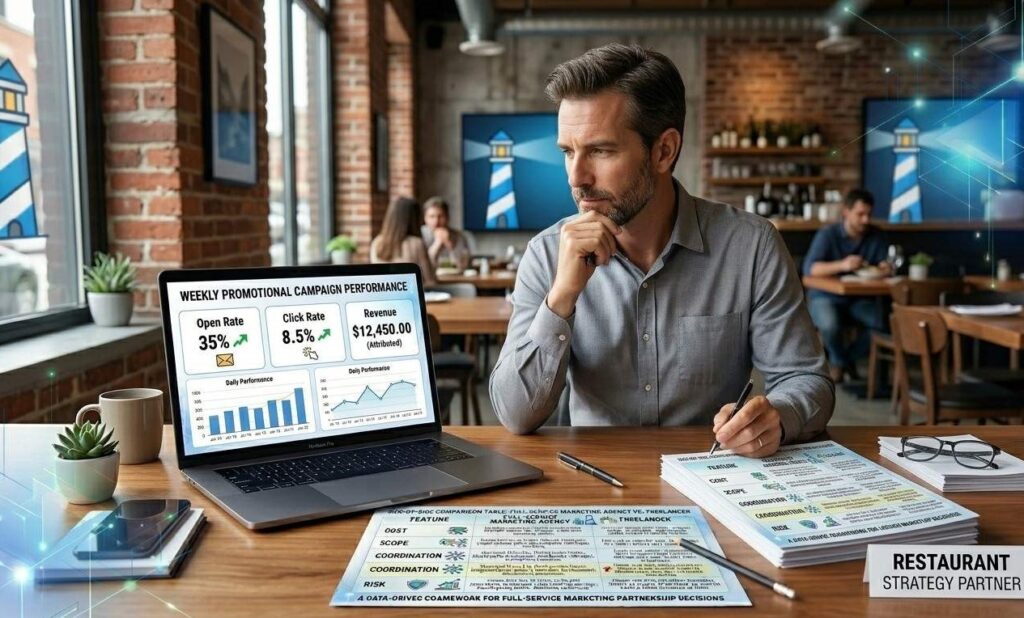
What Is Email Marketing for Restaurants?
Email marketing for restaurants is the practice of collecting guest contact details, building a permission-based list and sending targeted messages that bring those guests back through your door. It is different from social media marketing because every person on your list has actively chosen to hear from you. That changes everything about how they read your messages.
A restaurant email list gives you a direct, reliable channel to your most loyal guests. You can use it to announce a new seasonal menu before it goes live, fill a slow Tuesday with a midweek special, invite your top spenders to a private tasting or run a birthday campaign that brings lapsed guests back. Each of these campaigns costs you nothing beyond the platform fee.
According to Omnisend’s 2026 Ecommerce Marketing Report, the food and drink industry ranked as one of the top three converting email sectors in 2025, with a click-to-conversion rate of 14.9%. That means nearly 15 out of every 100 people who clicked through a food and drink email made a purchase.
The same report found that automated emails, those triggered by guest behaviour rather than sent on a fixed schedule, earn 16 times more revenue per send than standard campaign emails. For a restaurant, that means a well-set-up welcome sequence or a birthday email running in the background earns you money every week with zero extra effort.
How to Build a Restaurant Email List From Scratch
The fastest list-building method is to capture emails at the point of reservation. OpenTable, Resy and Tock all let you include an email opt-in at checkout. Add one checkbox: ‘Send me special offers and new menu updates.’ Most diners who book online tick it, because they are already in a positive mindset about visiting you.
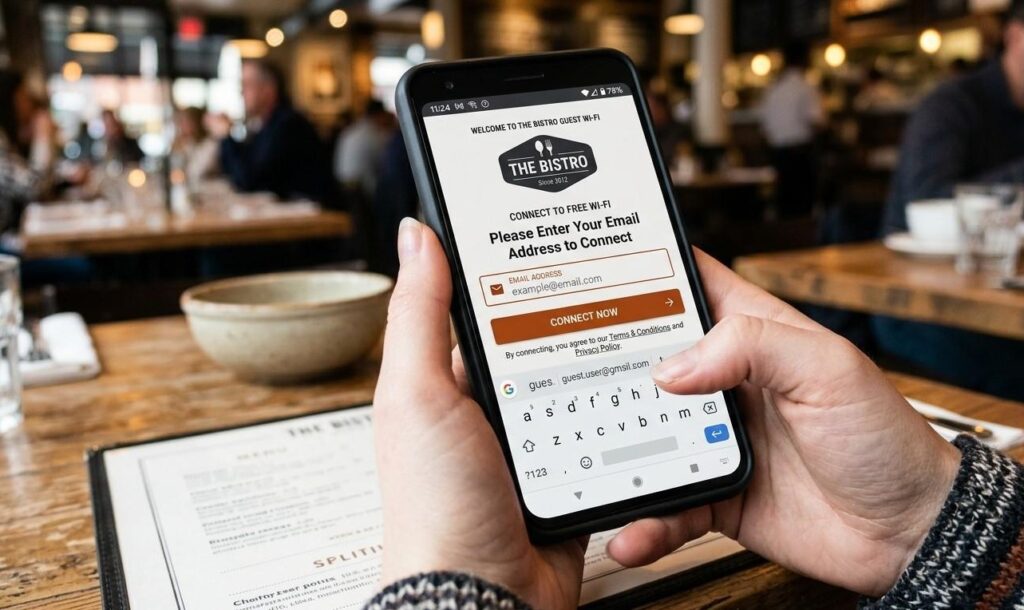
Your Wi-Fi login page is the second strongest collection point. A guest connects to your internet, enters their email and is online in under 20 seconds. Tools like Beambox and Bloom Intelligence run this process automatically and push new subscribers directly into your email platform. A busy 80-seat restaurant using guest Wi-Fi typically adds 200 to 400 new subscribers per month from this source alone.
Beyond reservations and Wi-Fi, ensure your site is structured to attract organic traffic using basic SEO for restaurant websites, then add a sign-up link to your Google Business Profile description and Instagram bio. These placements require zero budget and consistently bring in subscribers who are already interested in your food. A printed card on each table with a QR code linking to your sign-up form also works well in counter-service and casual dining environments.
Finally, never buy a list. A purchased list destroys your deliverability. Every spam complaint trains email providers to filter your future sends into junk. Build your restaurant customer list one real guest at a time. It takes longer but the open rates and revenue you earn from a clean list are far higher than anything a purchased list produces.
What Emails Should Restaurants Send to Customers?
The welcome email
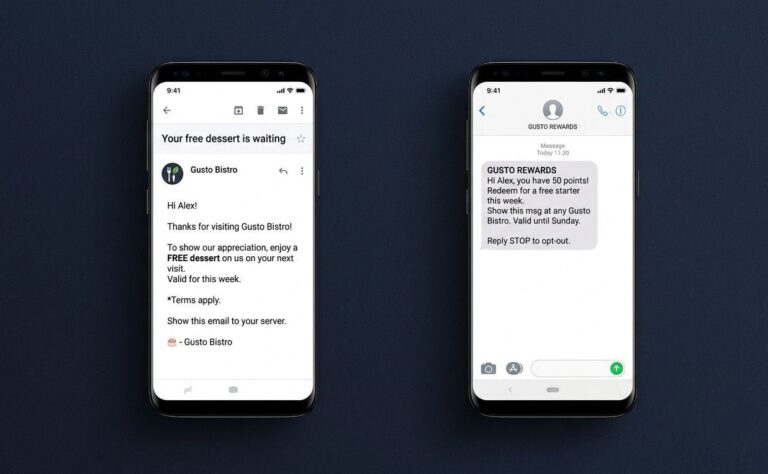
Send this automatically the moment a guest subscribes. Thank them for joining, introduce your restaurant’s story in two sentences and give them one specific reason to book: a complimentary dessert on their next visit, early access to your seasonal menu or a behind-the-scenes video of your kitchen. Welcome emails have an average open rate above 50% across all industries. That makes your first email your highest-value touchpoint.
The promotional campaign
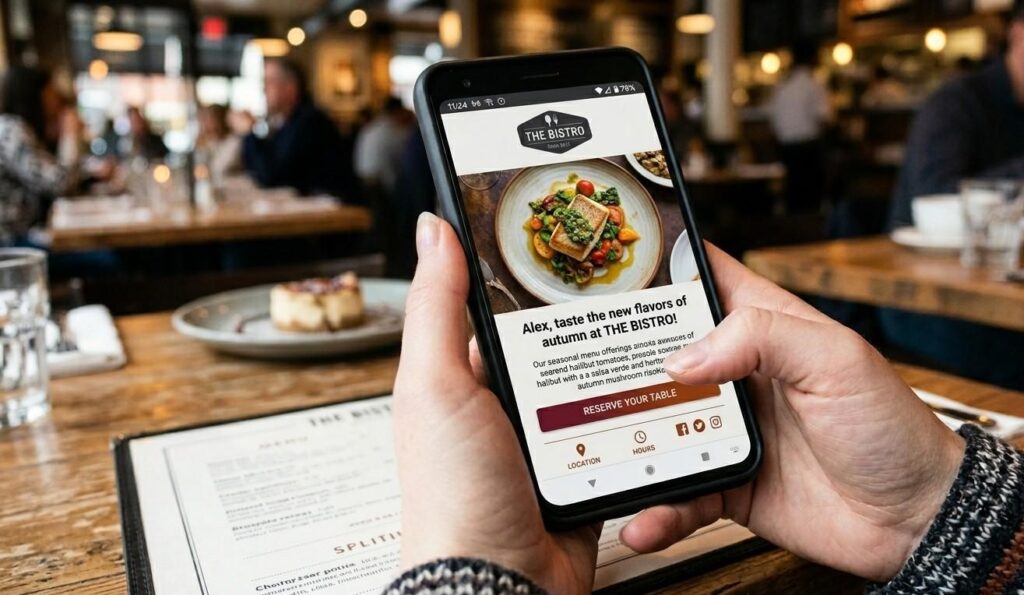
Send one promotional email per week. Keep it tight: one offer, one image and one call-to-action button that links directly to your reservation form. A Wednesday email offering a weekend special or a limited-time menu gives guests enough lead time to plan and book. Subject lines under 45 characters with the guest’s first name in the preview text consistently outperform generic subject lines by 20 to 26% in open rate.
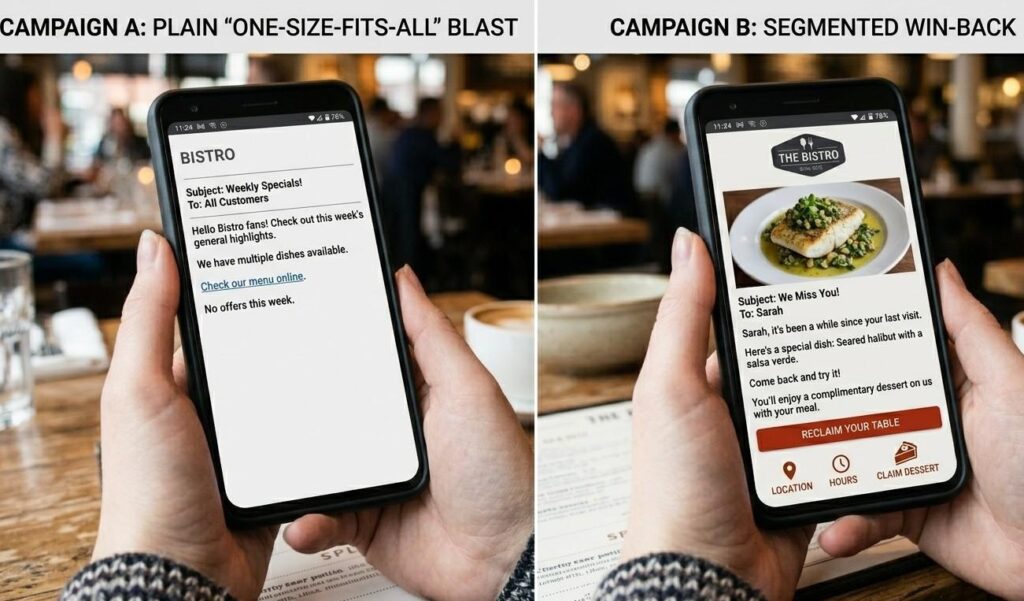
The win-back email is a third campaign type worth running as an automation. Set it to trigger for any subscriber who has not visited in 60 days. Give them a specific reason to return: a new chef, a seasonal ingredient or a limited-run event. Do not default to a discount. A win-back email framed around something new outperforms a straight discount offer because it creates curiosity rather than training your audience to wait for price cuts.
What Is the Best Email Platform for Restaurants?
The right platform depends on your list size and technical appetite. Mailchimp suits restaurants just starting out. The free plan covers up to 500 subscribers and lets you build a basic welcome automation, a weekly campaign template and a simple sign-up form. The interface is clean and the learning curve is short.
Klaviyo is the better choice once your list passes 1,000 subscribers or once you want to track revenue per email. Klaviyo connects to reservation platforms and point-of-sale systems, which means it can tell you exactly how much money each campaign generated. Its automation builder lets you create multi-step sequences triggered by visit frequency, spend level or last interaction date. The cost is higher but the reporting pays for itself quickly.
A third option worth considering is Toast Email Marketing, built into the Toast POS system. If your restaurant already runs on Toast, this integration is the fastest path to list building because your POS captures guest emails automatically at checkout. Campaigns go out directly from the same dashboard you use to manage orders and inventory.
Whichever platform you choose, connect it to your restaurant marketing setup from day one. Platform data tells you what your guests respond to. The sooner you start collecting that data, the better your future campaigns perform.
How Often Should a Restaurant Email Its Customers?
The right frequency is one to two emails per week for most restaurants. More than two and your unsubscribe rate climbs. Fewer than one per fortnight and guests forget they subscribed, which also kills open rates.
Structure your sends around a simple rhythm: one promotional email mid-week promoting your weekend or a limited offer, and one value-led email that builds relationship without asking for anything. Value-led emails work well when they share a recipe from your kitchen, tell a short story about a supplier or introduce a team member. These emails keep your list warm in between promotions.
Seasonal events shift this frequency temporarily. A Valentine’s Day campaign, a summer menu launch or a holiday private dining push can justify three emails in one week if each one serves a distinct purpose. But treat those as exceptions. Your baseline of one to two emails per week is what builds a sustainable, high-revenue list over the long term.
Does Email Marketing Increase Restaurant Revenue?
Yes, and the returns are measurable. While high-ticket service strategies like email marketing for real estate agents focus on long nurture cycles, restaurant email marketing works by triggering high-frequency return visits from guests who have already eaten with you and enjoyed the experience. The cost of converting a lapsed guest back via email is a fraction of the cost of acquiring a cold customer through Google Ads.
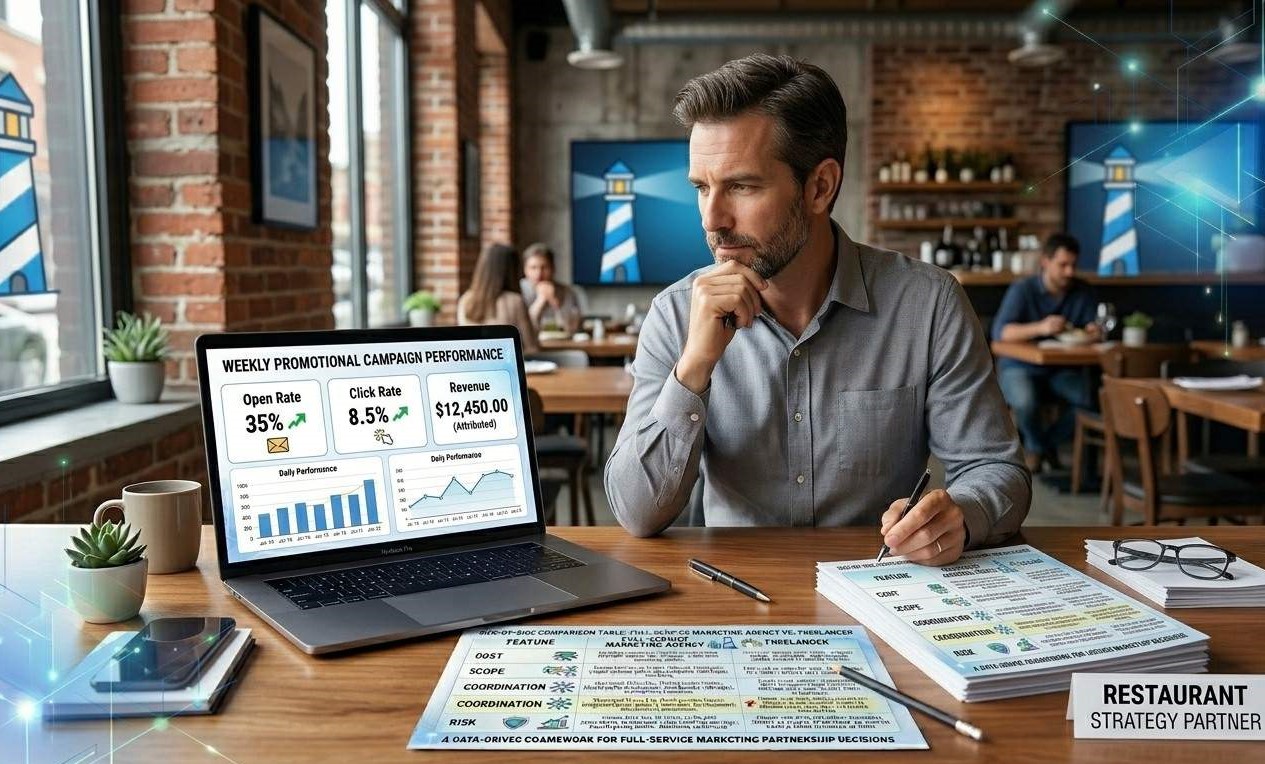
A restaurant with 1,000 subscribers sending two campaigns per month at a Mailchimp cost of roughly $30 per month can generate significant incremental revenue. If 15% of subscribers open each email, that is 150 reads per send. If 5% of those click through and half of those book a table averaging $65 per cover, each campaign generates roughly $244 in direct attributed revenue. That is an 8x return on the monthly platform cost before any automation revenue is added.
The automation layer compounds that further. A welcome sequence and a birthday email running in the background add revenue every week without any manual work on your end. That is the core value proposition of email marketing for restaurants: it pays you back reliably, it improves as your list grows and it costs less per booking than any paid channel.
Start Building Your List and Filling More Seats
Email marketing for restaurants is the most cost-efficient channel a dining operator can run, and a list of even 500 real guests earns more per email than a social following ten times that size. Start collecting addresses this week from your reservations and your Wi-Fi login. Then build your first welcome email before the month is out. Our lead generation service for restaurants sets up the full system for you. Contact us today to get started.
Written by Wajahat
Frequently asked questions
How do I build an email list for my restaurant?
Build your restaurant email list by adding an opt-in checkbox to your online reservation form on OpenTable, Resy or Tock. Install a Wi-Fi login page that asks for an email before granting internet access. Add a sign-up link to your Google Business Profile and Instagram bio. Place QR code cards on tables linking to a simple sign-up form. Collect addresses consistently and your list will grow to several hundred subscribers within a few months.
What emails should restaurants send to customers?
Restaurants should send three types of emails regularly. First, a welcome email that triggers automatically when a guest subscribes, introducing your story and giving one reason to book. Second, a weekly promotional campaign announcing a special, a new menu item or a limited event. Third, an automated win-back email that fires after 60 days of inactivity, giving lapsed guests a fresh reason to return. Rotate value-led emails between promotions to keep your list engaged without always making an offer.
How often should a restaurant email its customers?
Send one to two emails per week for the best results. More than two and unsubscribe rates climb. Fewer than one per fortnight and guests forget they opted in. Structure your schedule around one mid-week promotional send and one value-led send that shares a recipe, a supplier story or a team introduction. During peak seasons like Valentine’s Day or the holidays, you can increase to three sends in a single week, but treat that as an exception rather than the standard frequency.
What is the best email platform for restaurants?
Mailchimp is the best starting point for restaurants with fewer than 500 subscribers. The free plan includes basic automations and campaign templates. Klaviyo is the stronger choice once your list passes 1,000 subscribers because it tracks revenue per email and connects to point-of-sale systems. Toast Email Marketing is worth considering if your restaurant already uses Toast POS, since it captures guest emails automatically at checkout and sends from the same dashboard you use daily.
Does email marketing increase restaurant revenue?
Yes. Email marketing for restaurants consistently delivers a strong return because you are reaching guests who have already chosen you once. A list of 1,000 subscribers sending two campaigns per month can generate several hundred dollars in attributed revenue per send at minimal platform cost. Automations like welcome sequences and birthday emails add additional revenue every week with no manual effort. The more your list grows and the better you segment it, the stronger your returns per subscriber become.
How do I get customers to sign up for my restaurant newsletter?
The most effective method is to ask at the moment of reservation. Add a clear opt-in checkbox to your online booking form and most guests will tick it because they are already engaged with your restaurant. Follow that with a Wi-Fi login page requiring an email for internet access. For walk-in guests, use a table card with a QR code linking to your sign-up form. Keep the sign-up ask short: ask only for a name and an email. Every extra field you add reduces your conversion rate.