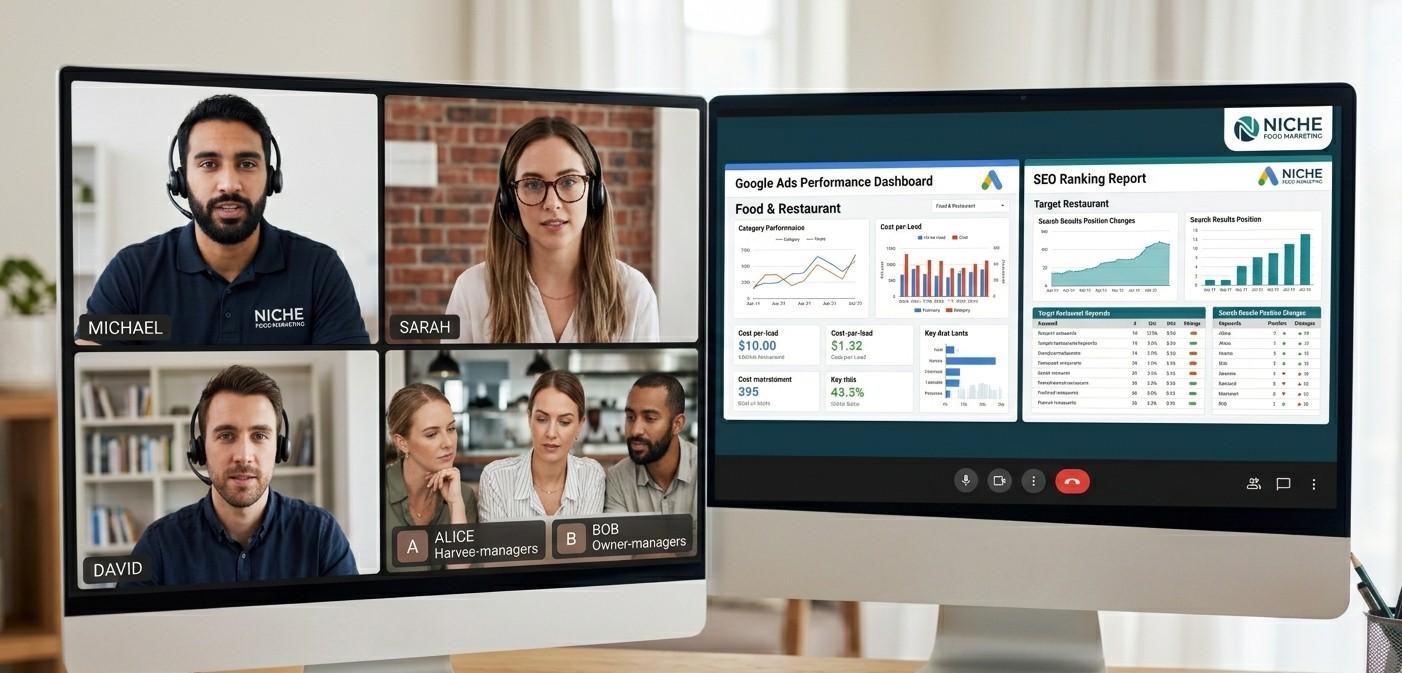
Quick answer — To choose a digital marketing agency, verify that they specialise in businesses like yours, ask for results from clients in your industry and check that their reporting shows revenue impact, not just traffic numbers. Red flags include long lock-in contracts with no performance clauses, vague deliverables and a refusal to share past client case studies. A niche agency that knows your industry usually outperforms a generalist shop for a small business with a specific growth goal.
You hired the agency. They promised Google rankings, booked calls and leads on tap. Three months later your phone is quiet and your invoice is not. Choosing a digital marketing agency is one of the most expensive decisions a small business owner makes, and the wrong choice burns budget fast. This guide gives you the exact checklist to avoid that outcome.
- Ask every agency to show results from a client in your exact niche before you sign anything.
- A good agency reports on revenue impact and cost per lead, not just impressions or follower counts.
- Month-to-month contracts or short initial terms signal that an agency trusts its own work.
- Choosing a digital marketing agency that specialises in your industry cuts the learning curve and your ad spend.
- Request a written scope of work listing every deliverable, owner and deadline before money changes hands.

What to Look for When You Choose a Digital Marketing Agency
The single most useful filter is relevance. An agency that has grown another restaurant, another real estate team or another business in your category already knows your customer, your seasonality and your margin. They do not need three months of onboarding to understand why slow Tuesdays are a problem for a dining room or why spring is the right time to push buyer leads for a realtor.
Ask every shortlisted agency for two or three case studies from clients in your niche. The case study should include the starting point, the specific tactics used and the measurable result, such as leads per month, cost per acquisition or revenue lifted. If they cannot produce this, they have not done it before. Move on.
Second, look at who will actually work on your account. Many agencies win business with a senior pitch team and hand the work to a junior in their second month. Ask directly: who manages my account day-to-day and what does their workload look like? A good agency will answer without hesitation. A bad one will get vague.
Finally, check their own marketing. An SEO agency with a weak website is a warning sign. A social media agency with sparse, low-effort profiles is a larger one. They are selling you the result they cannot achieve for themselves.
How Much Does a Digital Marketing Agency Cost?
Pricing varies widely and it correlates with scope, not quality. A freelancer charging $500 a month might outperform a retainer agency charging $5,000 if the brief is narrow enough. For small businesses, the more useful question is: what does this channel cost per qualified lead and how does that compare to my lifetime customer value?
Budget ranges for common services in 2025: SEO retainers run $750 to $3,000 per month for a focused local campaign. Google Ads management typically costs $600 to $2,000 per month in management fees, plus your ad spend. Social media management sits between $800 and $2,500 per month for two to four platforms with content creation included. Full-service retainers covering multiple channels start around $2,500 and climb from there.
Be cautious of very low pricing, especially for SEO. An agency offering full SEO for $200 a month is likely running link schemes or auto-generated content. Both get sites penalised. The cost of recovering from a Google penalty far exceeds the savings.
According to BrightLocal’s SMB Marketing Report 2025, 54% of small business owners currently manage marketing on their own. Most who move to an agency do so when the time cost of DIY outweighs the fee. That tipping point usually arrives around 10 hours of marketing work per week.
Red Flags When Choosing a Marketing Agency
Contracts that protect the agency, not you
A 12-month lock-in with no performance clause is written to protect the agency’s revenue. A good agency offers a 90-day initial term or a rolling monthly arrangement after a short onboarding window. They do this because they expect to earn your renewal through results.
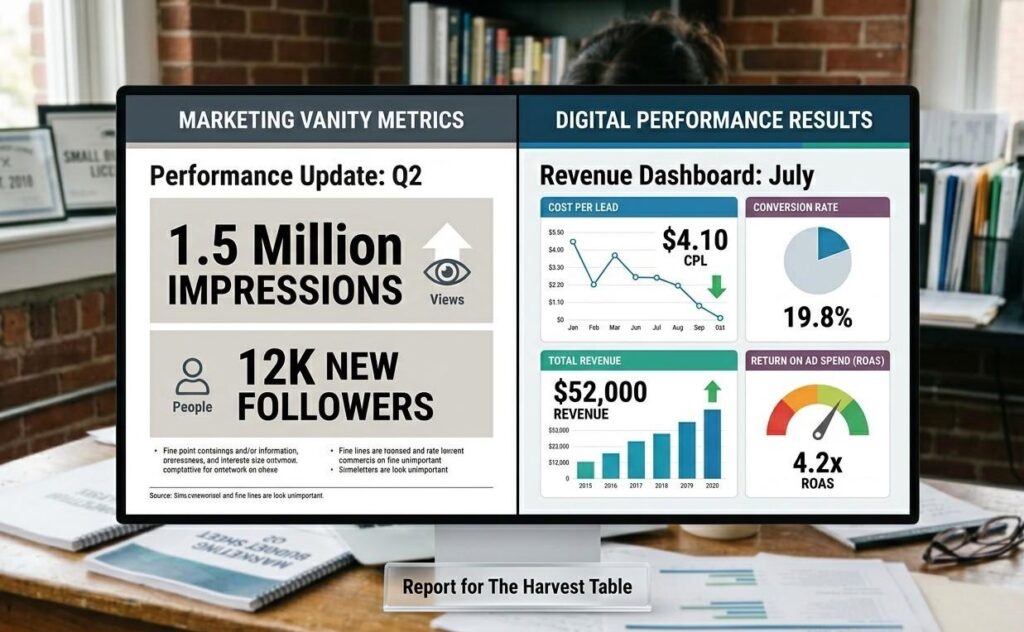
Vanity metrics as proof of performance
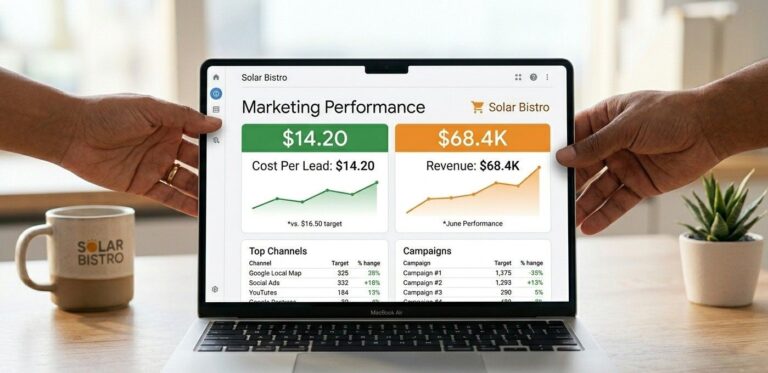
If your monthly report leads with follower growth, impressions and website sessions, and never shows cost per lead or revenue attributed, your agency is measuring what is easy, not what matters. Before you sign, ask for a sample report. A strong agency shows you a dashboard that connects ad spend to booked appointments or table reservations or calls made.
Other red flags worth taking seriously: no named person assigned to your account, slow responses during the sales process (it only gets slower after signing), pricing that changes after the proposal stage and case studies with no verifiable company names or contact references.
Questions to Ask a Marketing Agency Before You Hire
These five questions will tell you everything you need to know in a 30-minute discovery call.
First: ‘Can you show me results from a client in my industry, with specific numbers?’ A prepared agency has this ready. An unprepared one gets defensive.
Second: ‘Who will manage my account and how many other accounts do they handle?’ Account managers at stretched agencies handle 20 or more clients. That means roughly two hours of attention on your business per week.
Third: ‘What does your reporting look like and which metrics do you track?’ If they hesitate or describe a generic dashboard, that is your answer.
Fourth: ‘What is your contract length and what happens if we do not hit agreed targets?’ Performance clauses are rare but they exist. Asking the question tells you a lot about how confident the agency is in their process.
Fifth: ‘What does your onboarding process look like and what do you need from me to start?’ A structured agency has a real answer. Our about page walks through how Adnnel runs its onboarding so you know exactly what to expect before day one.

Should You Hire a Local or Remote Marketing Agency?
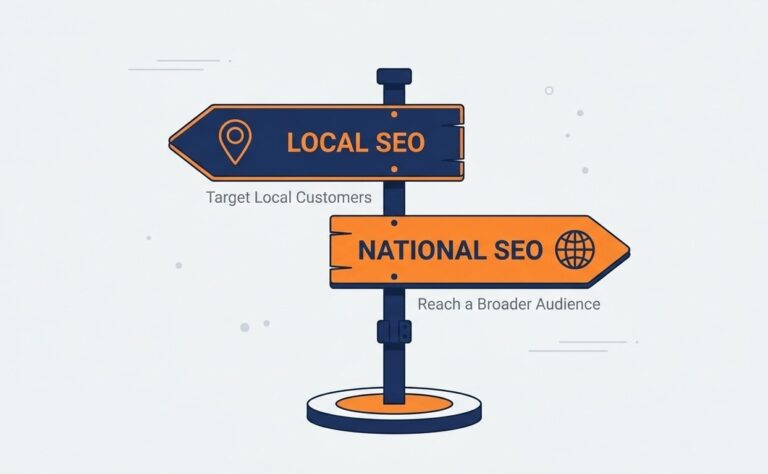
The answer used to matter more than it does now. Since 2020, remote-first agencies have closed the gap on local shops entirely. The real question is not geography. It is niche fit and communication speed.
A remote agency that specialises in restaurant marketing or real estate lead generation will deliver better results than a local generalist who learned your industry through you. The local agency’s advantage, walking into your dining room or attending an open house, rarely translates into measurably better ad copy or keyword research.
What does matter is time zone alignment and response time. If you operate in North America and your agency is 12 hours ahead, a campaign crisis at 10am your time hits at 10pm theirs. Ask where your account manager is based and what their response time commitment is for urgent requests.
The same logic applies to channel specialisation. If you need Google Ads and SEO together, a niche agency that runs both outperforms two separate vendors who do not talk to each other. Our Google Ads management service and SEO, GEO and AEO service are designed to work together under one strategy from day one.
Is a Niche Agency Better Than a Full-Service Agency for Small Business?
For most small businesses, yes. A full-service agency selling every channel under one roof often runs each service at average quality. A niche agency running one or two channels for businesses in your exact category runs them at a high level because that is all they do.
The counterargument is that a full-service shop saves coordination time. That is true. But coordination time only matters when each service is working. A Google Ads campaign that does not align with the SEO strategy is a budget leak, not a time-saver.
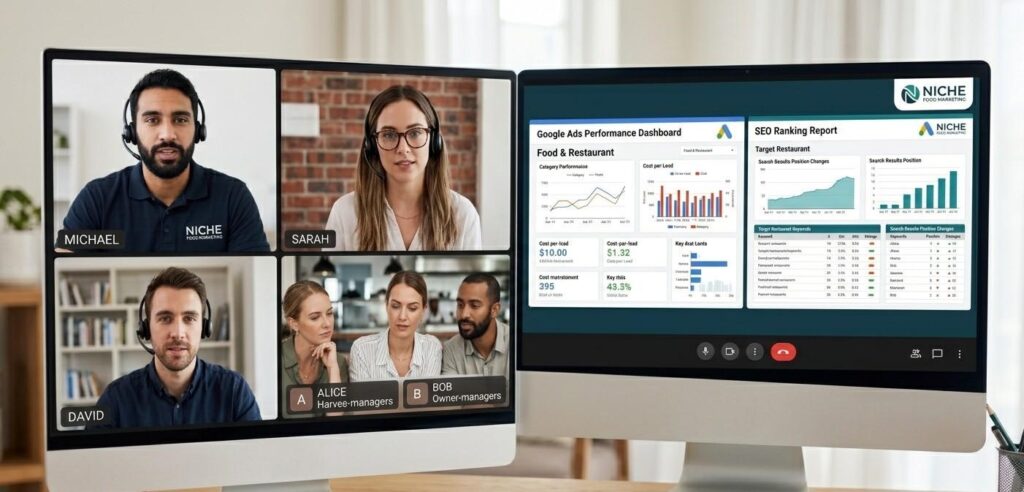
The practical test: ask the agency to describe how their Google Ads and SEO teams communicate on keyword strategy. If they give you a clear process, integration is real. If they pause and describe a monthly meeting, those teams are largely siloed and you are paying for the appearance of coordination.
Niche agencies also onboard faster. They already have templates, benchmark data and creative assets for your sector. That means your first campaign goes live in days, not weeks.
Ready to Choose an Agency That Gets It Right?
The right agency for a small business is one that knows your industry, shows you real results before you sign and reports on numbers that connect to your revenue. Choosing a digital marketing agency without a checklist is how businesses burn months and budgets. Contact Adnnel today for a free audit and a clear plan built around your specific goals, not a package copied from a competitor’s proposal.
Written by Wajahat
Frequently asked questions
What should I look for when hiring a digital marketing agency?
Look for an agency that has direct experience with businesses in your niche and can show you results from those clients, including specific numbers like cost per lead or revenue lifted. Also check their reporting format. A good agency reports on metrics that connect to your bottom line, not just traffic and follower counts. Ask who manages your account day-to-day before you sign anything.
How much does a digital marketing agency cost?
For small businesses, SEO retainers typically run $750 to $3,000 per month. Google Ads management fees sit between $600 and $2,000 per month, plus your actual ad spend. Social media management ranges from $800 to $2,500 per month with content creation included. Be cautious of pricing well below these ranges, since very low fees for SEO often signal tactics that carry a penalty risk and wipe out any short-term savings.
Should I hire a local or remote marketing agency?
Niche fit and communication speed matter far more than location. A remote agency that specialises in your industry will outperform a local generalist almost every time. The one practical consideration is time zone: confirm your account manager is based in a compatible zone and that their response time commitment for urgent campaign issues is reasonable. Geography alone does not determine how to choose a digital marketing agency.
What questions should I ask a marketing agency before hiring?
Ask for industry-specific case studies with real numbers. Ask who manages your account and how many accounts they handle at once. Request a sample report so you can see exactly which metrics they track. Ask about contract length and whether performance clauses exist. Finally, ask how their onboarding works and what they need from you to start. These five questions cover everything you need to choose a digital marketing agency with confidence.
What are red flags when choosing a marketing agency?
Red flags include long lock-in contracts with no performance protection, reports that show only impressions or follower growth instead of leads and revenue, no named account manager, and case studies with no verifiable details. Another red flag is a sales process where the person pitching you disappears after signing and hands you off to someone else. A trustworthy agency is transparent about team, process and results before any contract gets signed.
Is a niche agency better than a full-service agency?
For most small businesses, a niche agency delivers better results because they have deeper experience in your specific sector and already have the templates, benchmarks and creative assets for it. A full-service agency can save coordination time, but only if all its services are working well together. Ask any full-service candidate to describe how their paid and organic search teams coordinate on keyword strategy. Their answer will tell you whether integration is real or just marketing.